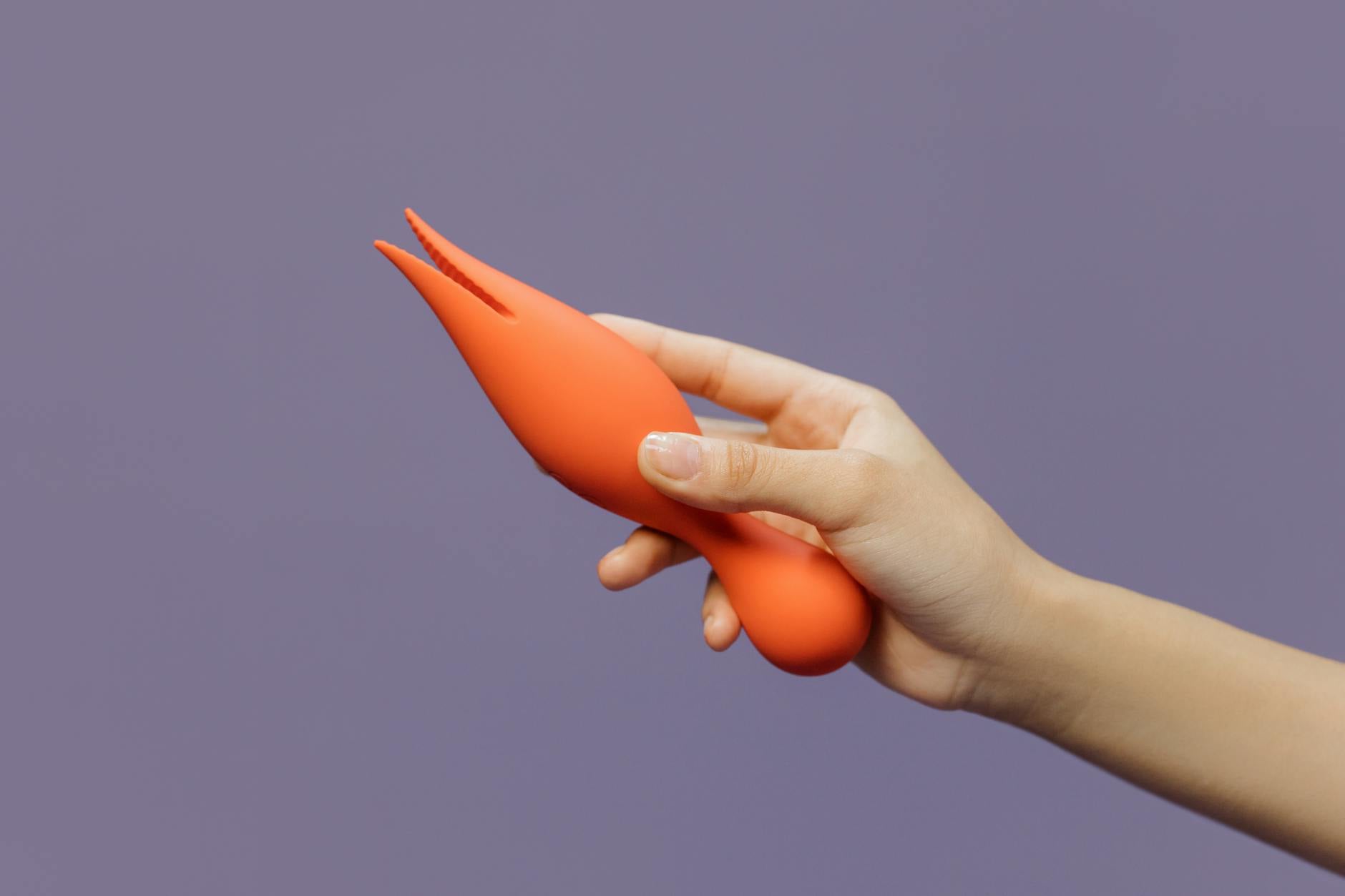
Here's the thing about painful sex nobody talks about
When sex hurts, your body learns to clench. Your pelvic floor tightens in anticipation, your brain associates arousal with threat, and the next time you try, everything contracts harder. It's a protective reflex. It's also a trap that makes the original pain worse, not better.
The problem with traditional penetrative approaches to fixing this: they ask your body to relax into the very thing it's learned to fear. That rarely works. Lemon clitoral vibrators work differently because they bypass the tension cycle entirely. They offer pleasure through a pathway that doesn't trigger the protective clench.
Why your pelvic floor tightens when sex hurts
Vaginismus, pelvic floor dysfunction, and the tension that builds after painful sexual experiences aren't psychological failures. They're neurological protection mechanisms. Your nervous system has learned that penetration equals pain, so it locks down the muscles around your vagina before anything can get in. Smart, right? Except it backfires because that clenching is often what makes penetration impossible or excruciating.
This tension can start anywhere: from endometriosis, vulvodynia, or vaginismus. Sometimes it's scar tissue from surgery or childbirth. Sometimes it's the aftermath of trauma. Sometimes it's just your body being cautious after one bad experience. The origin doesn't matter as much as what happens next.
When you try to push through pain to "train" yourself to relax, your nervous system just strengthens the protective response. More tension. More fear. More pain. The cycle compounds.
How suction breaks the cycle differently
A lemon vibrator using air-pulse or suction technology works on your clitoris, not your vagina. That matters enormously. Your clitoris has about 8,000 nerve endings concentrated in a tiny area. When you stimulate it through suction instead of direct pressure or vibration, something shifts in your nervous system.
You're creating pleasure signals from a part of your body that hasn't learned to brace for pain. There's no penetration. No internal pressure. No trigger for that protective clench. Instead, your brain gets flooded with sensation that feels entirely separate from the anxiety.
Over time, as you practice building arousal and even reaching orgasm through clitoral stimulation alone, your nervous system begins to decoupled pleasure from the painful experience. You're retraining your body on a fundamental level: pleasure is possible. Your body can relax. Sensation can be good.
The mechanism that makes lemon vibrators work for this
Lemon clitoral vibrators create suction that changes as your arousal builds. In early stages, the sensation might feel gentle or even unfamiliar. As blood flows to your clitoris and you become more aroused, the same pattern of stimulation feels completely different. Deeper. More intense. More satisfying.
This rising sensation is the opposite of a threat. Your nervous system interprets it as evidence that your body is safe and capable of pleasure. With each session, you're building neurological pathways that say "arousal equals safety" instead of "arousal equals pain."
Unlike traditional vibrators that deliver constant, direct stimulation, the air-pulse technology in lemon toys feels more like waves of sensation. For people whose bodies have learned to guard against penetration, this wave-like quality is less triggering. It doesn't feel like pressure pushing into tender tissue.
A practical path forward with your body
Start with zero penetration expectations. You're not training yourself to accept something that currently hurts. You're building a new pleasure experience entirely.
Begin with low suction settings. The temptation is to jump to intensity, but your pelvic floor has been on high alert. Let it slowly learn that stimulation doesn't mean pain. Spend 2-3 weeks at pattern 1 or 2 on your lemon vibrator, focusing on how the sensation changes as you become aroused.
Layer in water-based lubricant around the area, even though you're not penetrating. It's tactile permission. It signals to your body that you're taking care of yourself.
Practice breathing. This is the unsexy part that actually matters. When tension builds, we hold our breath. Your pelvic floor mirrors that holding. So breathe into your belly. Exhale for longer than you inhale. This activates your parasympathetic nervous system, the part that says "we're safe now."
After 3-4 weeks of solo exploration, some people find penetration becomes possible again because the nervous system has been rewired. Others find that clitoral pleasure alone is enough and that's completely valid.
When to involve a partner or therapist
If you have a partner, they need to understand this isn't about them. The pain exists independent of how much they care or how gently they try. Your nervous system is protecting you, not rejecting them. Many couples find that when the painful-sex person builds solo confidence first with a lemon vibrator, partnered sex becomes an option again naturally.
Talk before, not during. "I'm retraining my nervous system to separate pleasure from pain. I'm going to use a clitoral vibrator on my own for a while. When I'm ready, I'll let you know." That clarity prevents the partner from feeling abandoned or from trying to "help" by pushing past your boundaries.
If pain is severe or penetration is completely impossible, a pelvic floor physical therapist trained in trauma-informed care changes everything. They can release muscle guarding that you can't access alone. They're different from your regular PT. Look for someone who specializes in vaginismus or dyspareunia.
Common questions people ask
Will using a lemon vibrator make penetration impossible forever? No. Many people use clitoral toys exclusively for pleasure because they prefer it, but that's choice, not damage. Your vagina won't "forget" how to receive penetration.
Do I need expensive equipment? You don't need much. A lemon clitoral vibrator and water-based lubricant are genuinely all you need to start. Hello Nancy's entry-level options are designed exactly for this kind of therapeutic exploration.
What if I orgasm for the first time using a lemon vibrator? That's information. Your body is demonstrating that pleasure is possible. That's often the moment things shift psychologically. You're not broken.
How long before I can have penetrative sex again? It varies wildly. Some people reconnect in weeks. Others need months or realize they don't want penetration in the same way anymore. There's no timeline, only your body's own readiness.
Can I use a lemon vibrator alongside therapy? Yes, completely. Actually, tell your therapist you're doing it. Pelvic floor retraining through guided pleasure works alongside talk therapy. They're complementary.
The nervous system rewires through repetition
Your pelvic floor didn't lock down overnight. Your body learned caution through experience. Unlearning takes time, but it absolutely happens. The neuroplasticity research is clear: your brain and body can rewire associations through repeated safe, pleasurable experience.
A lemon clitoral vibrator provides that experience in a way that feels gentle and private. You control the timing, the intensity, and the pace. Your nervous system gets to learn at its own speed that pleasure is possible.
The point isn't to fix yourself so you can perform penetrative sex for someone else. The point is to reclaim a part of yourself that's been locked in protection mode. Pleasure. Sensation. Safety. Those things deserve to exist in your body.
People also ask
Can I use a lemon vibrator if I have vulvodynia?
Vulvodynia is ongoing burning or pain in the vulva that doesn't have a clear cause. Because lemon vibrators work through air-pulse suction rather than direct vibration, many people with vulvodynia find them more comfortable than traditional vibrators. Start low and watch for your body's response. If anything increases burning, stop. If it helps, that's data worth knowing. Some people with vulvodynia find that non-contact stimulation through suction reduces irritation.
Will a lemon vibrator hurt if I have endometriosis?
Endometriosis causes internal pain, not usually vulvar pain, so clitoral stimulation is often fine. What matters is whether you're stimulating internally or just working with your clitoris. Since lemon vibrators are external only, you have control over what gets stimulated. Your body will tell you immediately if something feels wrong.
Do I need to use a lemon vibrator daily to see results?
No. Three to four times a week gives your nervous system time to process between sessions without overloading. Your brain needs repetition, but it also needs rest to integrate what you've learned.
Can I use a lemon vibrator during my period?
Yes. Many people find that clitoral stimulation eases menstrual cramps because orgasm releases tension in the pelvic floor. Some prefer not to during their period for comfort reasons. That's a personal call.
What if using a lemon vibrator brings up emotions?
Pleasure after pain sometimes unlocks grief or anger or sadness. That's normal. Your nervous system is moving from protective shutdown to activation. If emotions feel overwhelming, pause. Journal. Talk to a therapist. You're not failing. You're processing.
Should I tell my doctor I'm using a vibrator for pelvic tension?
Yes, absolutely. Any healthcare provider worth seeing will recognize this as a legitimate therapeutic tool. If they judge, they're not the right provider. You're doing evidence-based nervous system retraining.
Moving forward
Pain can teach us that our bodies aren't safe. Using a lemon clitoral vibrator is one way to teach your nervous system a different story. Not that pain didn't happen, but that pleasure is also possible. That your body can relax. That sensation doesn't always mean threat.
This rewiring takes patience. But your pelvic floor didn't guard this tightly overnight. It won't unwind overnight either. You're not broken. You're healing at your own pace through a tool that meets your body where it actually is.
If you're ready to explore this path, start simple and start solo. Your body's permission is the only timeline that matters.