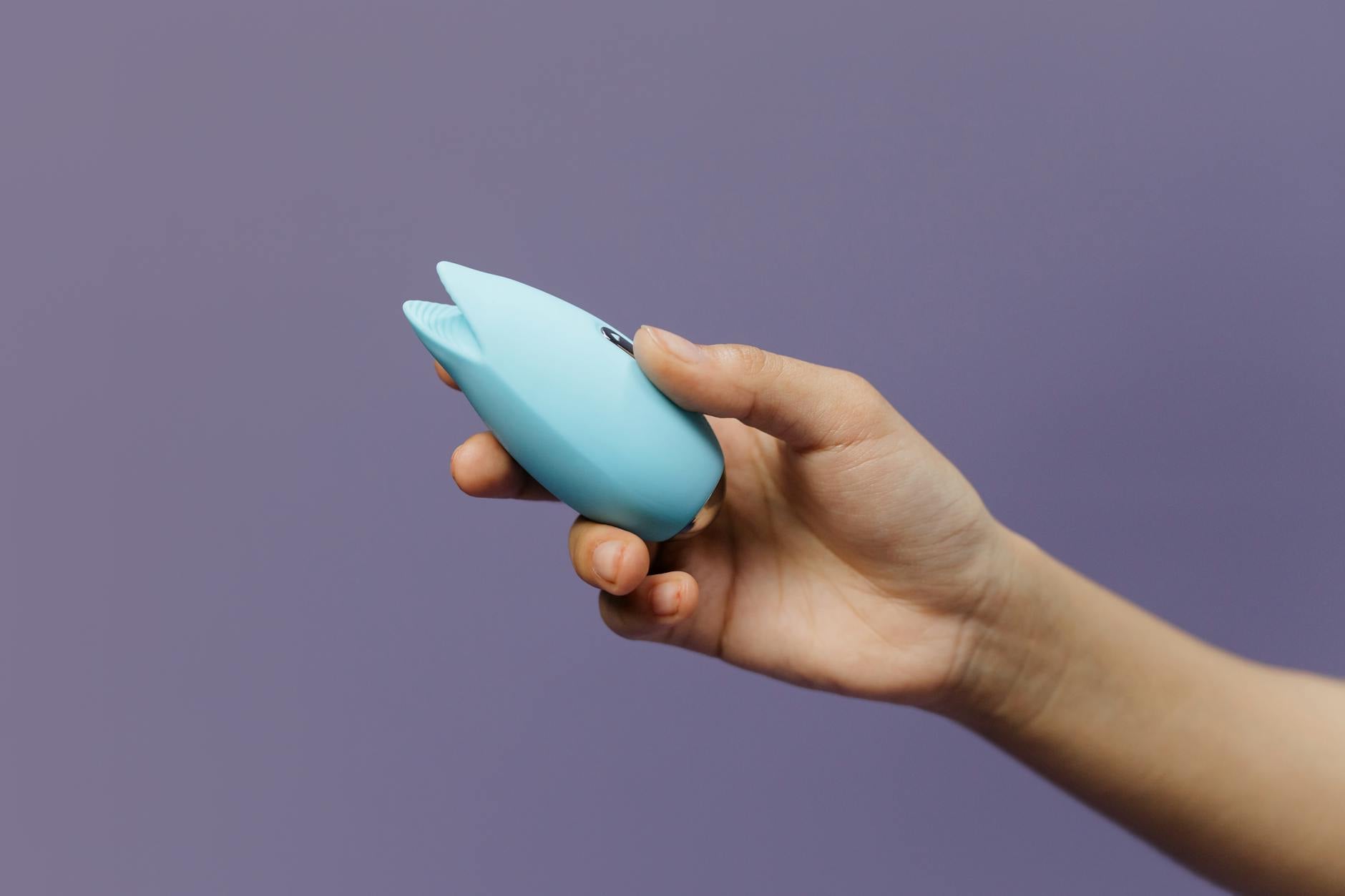
Let's talk about what hormones actually do to sensation
Your body can shift overnight. One month direct touch feels amazing. The next, it feels raw, almost painful. You're not imagining it, and you're not alone. Hormonal fluctuations, whether from birth control changes, thyroid adjustments, perimenopause, or medication shifts, can completely rewire how your nervous system registers touch.
Here's the thing nobody explains clearly: intense sensitivity isn't the opposite of numbness. They're cousins. Both mean your body is signaling that what worked before doesn't work now.
Why hormones change how pressure feels
Estrogen affects tissue thickness and blood flow to nerve endings. When estrogen dips or shifts, that tissue gets thinner and more reactive. Your clitoris has roughly 8,000 nerve endings concentrated in a small space. When the tissue surrounding those nerves changes, suddenly what felt like a nice hum feels like too much.
There's also the nervous system piece. Hormonal changes can make your parasympathetic nervous system (the relaxation response) harder to access. Your body stays in a slight state of alert, which makes direct pressure feel overwhelming instead of pleasurable.
Add in stress, sleep changes, or medication side effects, and you've got a recipe for sensitivity that makes your old toys feel less like pleasure and more like a problem.
Why lemon clitoral vibrators and suction technology work differently
Most vibrators work by friction and pressure. The Lemon uses suction. There's a meaningful difference when your tissue is hypersensitive.
Suction creates a gentle seal and rhythmic pressure that spreads stimulation across a wider area rather than concentrating force on one point. This is particularly helpful when direct, focused vibration feels too intense. The sensation is more diffuse, which many people describe as "less aggressive but somehow more satisfying."
The other advantage is control. Most lemon sexual toys and adult toys start at a lower intensity baseline. You're not fighting to find a "gentle enough" setting. You're working from gentleness upward, which changes the whole dynamic.
Three reasons why the switch helps
1. Reduced nerve overload. When nerve endings are hyperreactive, a lemon vibrator's suction approach doesn't spike the input the way direct friction does. You're still getting sensation, but it's not punching through an already-loud signal.
2. Broader stimulation pattern. Instead of one point of intense contact, suction covers a larger area. Neurologically, this spreads the signal load, which feels gentler even though the intensity setting might be the same.
3. Mental reset. A lot of hypersensitivity is fear-based. If direct touch has started to hurt or feel overwhelming, your brain anticipates pain on approach. Switching tools breaks that anticipatory loop. You're literally starting a new conversation with your body.
The practical switch: how to move from pressure to suction
Start low. If you're coming from a vibrator, your instinct might be to match the setting you used before. Don't. Begin at pattern one on a lemon clitoral vibrator and spend two or three sessions just exploring that baseline.
Wait for warmth. The glans clitoris (the visible part) fills with blood during arousal. Let your body warm up for 10-15 minutes before using any toy. This takes pressure off the toy to do all the work.
Use a barrier if you need to. Some people with hormone-shifted sensitivity benefit from a thin layer between toy and skin for the first few sessions. A soft cloth or even just letting the toy work through moisture can reduce that "too direct" feeling while your nervous system recalibrates.
Change the angle. Suction toys work at different intensities depending on angle and contact area. Shift the toy slightly or change the pressure point. You're learning your body's new map, which is genuinely interesting work.
When to know this is more than sensitivity
If pain appears that doesn't ease, that's different from hypersensitivity. Pain means something needs medical attention. Genital pain conditions like genitourinary syndrome, vulvodynia, or vestibulitis all require a specialist's input, not a toy swap.
But if the feeling is "this is too much but not painful," if it's intense or overwhelming or sharp discomfort that eases when you reduce pressure, that's hypersensitivity. That's often exactly what lemon vibrators are designed to address.
Why many people describe this as the turning point
When you've been white-knuckling through sex or pleasure because your old tools feel wrong, switching to something like a lemon sucker doesn't just change sensation. It changes permission. You're allowed to want something different. Your pleasure is allowed to evolve.
Most of my clients who make this switch describe it as reclaiming something they thought they'd lost. Turns out it wasn't lost. It just needed a different approach.
FAQ: Hormonal shifts and lemon vibrators
What hormonal changes most commonly shift clitoral sensitivity?
Birth control changes affect most people within 2-3 cycles. Thyroid medication adjustments can take 4-6 weeks to show up. Perimenopause sneaks up unevenly. Antidepressants and blood pressure meds show effects within the first month. The pattern isn't always smooth, which is why tracking your cycle and symptoms matters. If you can't identify a trigger, that's worth mentioning to your GP.
Can I use a lemon clitoral vibrator if I'm already numb and don't feel much?
Yes, but differently. Hypersensitivity and hyposensitivity sometimes need the same tool for different reasons. If you're numb, suction's broader stimulation pattern can sometimes help because it engages more tissue and nerves at once. Start with a longer warm-up and try higher intensity settings. How to Use a Lemon Vibrator When Antidepressants Numb Your Sensation goes deeper into that specific friction.
Do I need to switch back to my old vibrator after my hormones stabilize?
Not necessarily. A lot of people find that once they've switched to a lemon vibrator, they prefer it even after sensitivity settles. The gentler baseline, the suction approach, the control. Those are features, not workarounds. Your preferences can absolutely evolve.
How long does it take for hormonal sensitivity to stabilize?
That depends entirely on what triggered the shift. Birth control adjustments typically settle within 3 months. Thyroid medication changes can take 6-12 weeks. Perimenopause is more of a slow drift than a flip. If your sensitivity hasn't improved after 3 months of a tool switch, that's a signal to check in with a healthcare provider.
Can hormonal sensitivity be managed alongside a partner?
Absolutely. The conversation is worth having before you introduce a new toy. "My body is responding differently to stimulation. I want to explore what works now instead of forcing what used to work." That's honest and clear. If your partner is involved, they often find suction toys less tiring anyway, which is a bonus. How to Use a Lemon Clitoral Vibrator With Your Partner for Mutual Pleasure walks through that dynamic more fully.
Are there positions or angles that work better with a lemon sucker when I'm sensitive?
Yes. Lying on your back gives you control and visibility. Side-lying reduces stimulation pressure if you want even more gentleness. Angled positioning (like semi-reclined) can help diffuse sensation. Experiment during solo sessions to find your baseline, then adjust with a partner if relevant.
The real shift
Hormonal changes are frustrating because they feel like your body's betraying you. But what's actually happening is your body's giving you new information. Lemon vibrators and suction-based clitoral stimulation aren't a downgrade from what came before. They're a translation. Your pleasure hasn't disappeared. It just speaks a different language now.