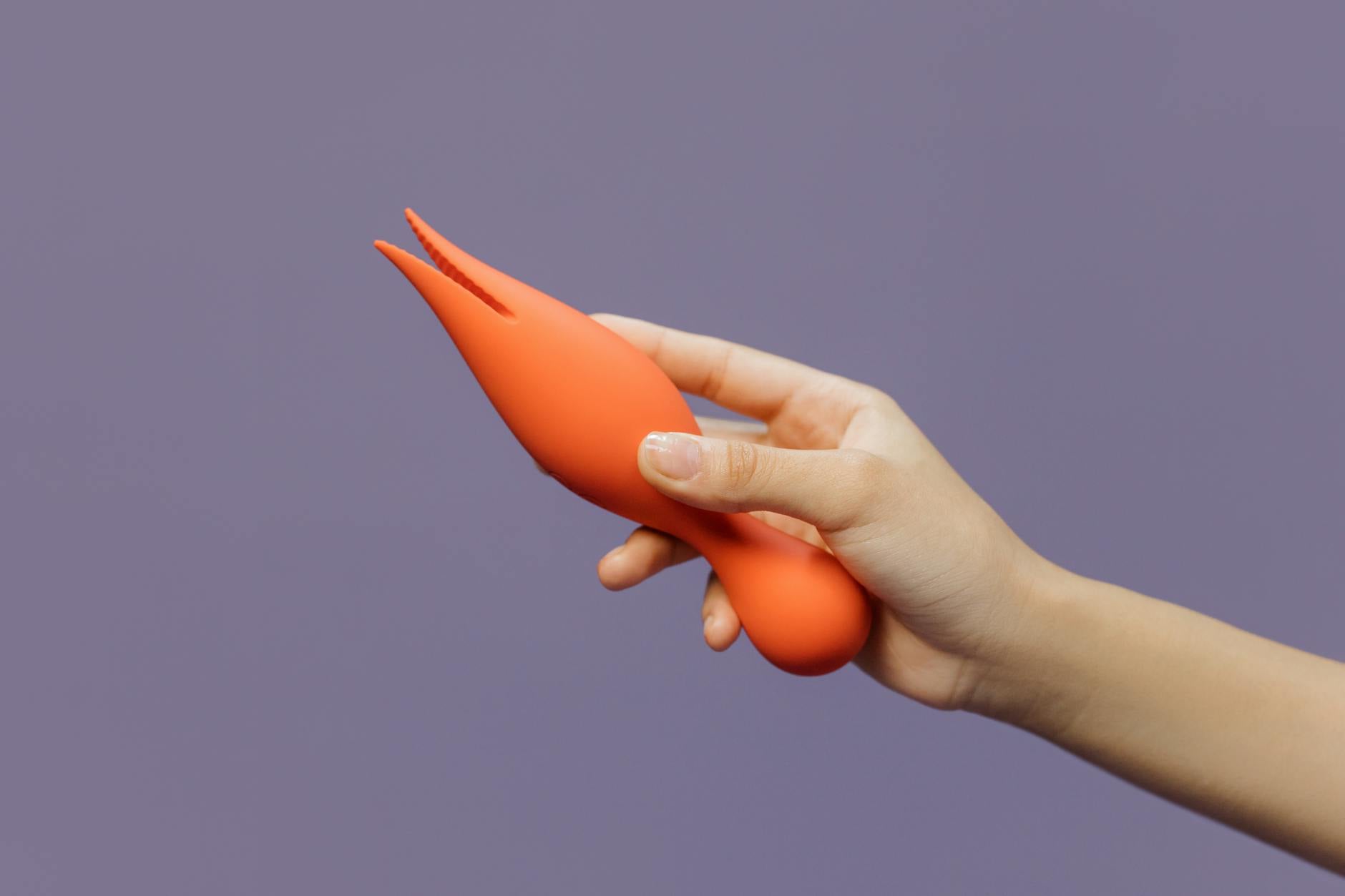
The weird math of partnered pleasure
Here's something nobody talks about openly: the mental energy required to sync two bodies, two arousal timelines, and two sets of expectations can actually kill pleasure. You're managing his timing, your comfort, whether you're taking too long, whether he's bored, whether you look a certain way. The moment your brain gets busy doing logistics, your body checks out.
A lemon vibrator solves that equation. It's just you. No negotiation, no timing, no apology when you need twenty minutes instead of five.
The permission problem
I work with a lot of people, mostly women and femmes, who describe this: they're in a relationship, but they feel like asking for pleasure is selfish or demanding. Even when their partner says "I want you to enjoy yourself," something underneath doesn't believe it. The cultural conditioning runs deep.
When you use a lemon clitoral vibrator solo, you don't have to ask permission. You don't have to justify why you need it. You don't have to reassure anyone that it's not about them. This sounds small until you realize how much headspace that frees up. Your pleasure becomes simple again. It's just for you.
What "pressure" actually means
Sexual pressure isn't always explicit ("hurry up"). Sometimes it's invisible: the sense that you're performing instead of feeling, that your arousal needs to fit someone else's schedule, that your orgasm is partly his responsibility (which means his success is tied to your success, which means you're managing his emotions).
I've had clients tell me that the first time they used a lemon suction toy alone, they cried. Not from the sensation, but from the relief of not managing anyone else's experience. The clitoral vibrator did one job. Their body could just respond.
Why suction feels different when there's no one watching
The lem vibrator works through gentle suction and pulsing. But here's the psychological part that matters: when you're alone, you can explore your own rhythm without performing it. You can start and stop without explanation. You can take thirty seconds or thirty minutes. You can switch patterns five times or stay with one.
For people who've spent years calibrating their pleasure around a partner's pace, this is revolutionary. Your nervous system learns that pleasure doesn't have an audience. It doesn't have to look a certain way. It doesn't have to happen on anyone's timeline but yours.
The arousal permission that changes everything
One of the biggest barriers I see is this: solo pleasure often feels "selfish" or "lesser than" partnered sex. If that's sitting in your head, you'll sabotage yourself. You'll rush. You'll feel guilty. You'll interrupt your own experience.
But here's what the research shows: the orgasms people have alone are often more intense, more varied, and more satisfying than the ones they have with a partner. Not because the partner is bad at it. Because there's no audience. Because your body isn't managing anyone else's experience.
When you give yourself permission to prioritize your own pleasure, using a lemon clitoral vibrator or any other tool, something shifts. You stop apologizing for taking the time you need. Your arousal doesn't have to be fast or performative.
Photo by Madison Inouye on Pexels
Solo exploration as a baseline for partnered sex
Here's something counterintuitive: if you want better partnered sex, start with solo pleasure. And I mean actually start there, not as a consolation prize when a partner isn't available.
When you know your own body, your own arousal patterns, what patterns feel good, how long it takes you to build, what your orgasms actually feel like when there's zero pressure, you bring that knowledge into partnered sex. You can ask for what you need. You can tell your partner what actually works. You're not guessing or performing or hoping they figure it out.
A lemon vibrator becomes a baseline tool. Not a replacement for partnered intimacy, but a foundation for understanding your own capacity for pleasure.
The logistical freedom that matters
Let's be practical. With a partner, you need coordination. You need privacy, timing, energy alignment. Sometimes you don't have it. Sometimes you want pleasure and he's asleep, at work, traveling, or just not in the mood.
A lemon clitoral vibrator lives in your nightstand. You have ten minutes? Use it. You have an hour? Use it. No one else needs to be available. No one else needs to be in the mood. This alone removes a huge source of relationship friction. You're not resenting your partner for not being available. You're not guilt-tripping yourself for wanting pleasure.
Anxiety melts when you're not managing anyone else
Performance anxiety is real. Whether it's worry about how you look, how long you're taking, whether you're being too loud, whether you're asking for too much. All of that noise quiets down when you're alone.
Your nervous system can actually settle. Your body can focus on sensation instead of surveillance. You might find that orgasms come easier. You might find that you can feel more sensation. You might discover aspects of your pleasure you never knew existed when you weren't worried about judgment.
Why this matters for your actual relationships
Paradoxically, prioritizing solo pleasure often improves partnered intimacy. When you know you can satisfy yourself, you show up in partnered sex from a different place. You're not desperate. You're not managing expectations. You're not keeping score.
You can actually enjoy your partner's presence instead of relying on them for access to pleasure. That's a fundamentally different energy, and partners feel it.
The boundary it creates
Using a lemon sexual toy solo also sets a clear boundary: your pleasure is yours to manage. This might sound simple, but it's a huge shift for people who've been taught that pleasure is something a partner provides, or something you negotiate, or something you owe.
When you take ownership of your own orgasm, you stop resenting your partner for not delivering it. You also stop feeling obligated to deliver theirs. The dynamic becomes more equal, more honest, less transactional.
How to start, practically
If you're new to this: pick a time when you won't be interrupted. Not rushed, not "ten minutes before work." Give yourself real time.
Start with patterns 1 or 2 on your lem vibrator. There's no rush to crank it up. Explore what feels good at lower intensities. You might be surprised at how much sensation you can feel.
Don't set an expectation of orgasm. Sometimes the point is just to feel something. To learn your own body's language. To remind yourself that pleasure is accessible to you without anyone else's participation.
Read more about how a lemon suction toy can support your specific needs in how to use a lemon vibrator when arousal takes longer to build or explore the broader benefits of why lemon vibrators are better for solo pleasure than traditional vibrators.
FAQ
Is using a lemon vibrator solo selfish if I'm in a relationship?
No. Your pleasure belongs to you. Solo pleasure and partnered pleasure are not zero-sum games. In fact, when you prioritize your own satisfaction, you often bring better energy, more knowledge, and less resentment into partnered sex. A healthy relationship includes space for each partner to access pleasure independently.
Will a lemon clitoral vibrator make partnered sex feel less important?
Not typically. What often happens is the opposite: when you're not dependent on a partner for pleasure, partnered sex becomes something you choose rather than something you need. That shift changes the dynamic entirely, usually for the better.
How often should I use a lemon suction toy alone?
As often as feels good. There's no "normal" frequency. Some people use it weekly, some daily, some a few times a month. The point is that it's yours to control. There's no schedule you need to follow except the one your own body wants.
Will my partner feel weird about me using a lemon adult toy solo?
Some partners won't. Some will be curious. Some might feel insecure at first. If you're in a relationship, it helps to be honest: "This is about me knowing my own body better. It has nothing to do with whether I'm attracted to you." A partner worth staying with will understand. If they don't, that's worth examining.
Can I use a lemon vibrator and still have great partnered sex?
Absolutely. In fact, most people who know their own bodies through solo play report better partnered sex. You know what works. You can communicate it. You're not relying on your partner to guess. You're more relaxed because you're not worried about access to pleasure.
What's the difference between pleasure "for myself" and pleasure "for the relationship"?
The difference is ownership. Pleasure for yourself is about you knowing your capacity, your timeline, your preferences. Pleasure for the relationship is negotiated, scheduled, collaborative. Both matter. The mistake is treating solo pleasure as less important or less "real." It's the foundation.
The bottom line
A lemon vibrator is a tool for one simple thing: reclaiming pleasure as something that belongs to you, on your timeline, with your preferences. No negotiation. No apology. No performance.
If you're carrying guilt about wanting solo pleasure, or if you've been managing someone else's expectations around sex for so long you've forgotten what your own desires actually feel like, a lemon clitoral vibrator is an invitation to remember. Your pleasure matters. You deserve access to it. And you don't need permission.