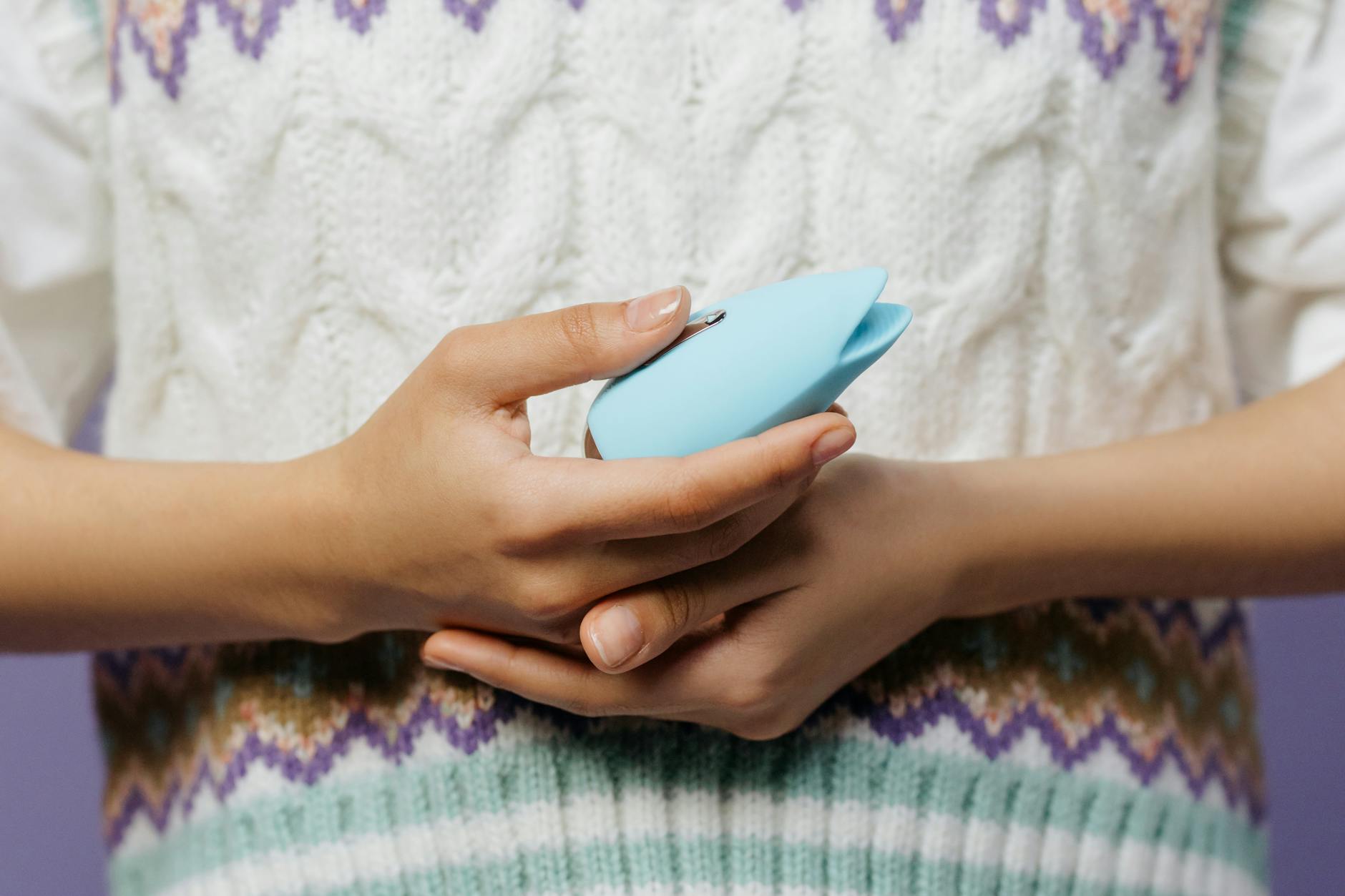
The honest truth about slow arousal
Let's be real. You're not broken because your body needs 20 minutes to warm up instead of five. Slow arousal is one of the most common shifts people experience, especially in long-term relationships, after hormonal changes, or during seasons of life stress. And almost nobody talks about it without shame attached.
Here's what I see in my practice: couples arrive thinking one partner has "lost desire" when what's actually happened is arousal has simply recalibrated. The body is working exactly as designed. It just has a different timeline now.
The friction comes when you're partnered with someone whose arousal builds faster. Suddenly there's a mismatch. One person is ready, the other isn't, and without a tool to bridge that gap, resentment and disconnection move in. A lemon vibrator doesn't fix the mismatch. But it does make the difference disappear.
Why arousal speed changes
Think of arousal like a dimmer switch instead of an on-off button. Multiple things move that dial, and when several of them shift at once, the time it takes to go from zero to fully engaged stretches out.
Hormonal recalibration. Estrogen and testosterone don't just affect lubrication. They affect blood flow to genital tissue, nerve sensitivity, and how quickly the nervous system responds to stimulation. After pregnancy, during hormonal birth control use, post-menopause, or even during stressful seasons, these hormones fluctuate. The body still gets aroused. It just gets there on a different clock.
Mental load. This one's huge and almost never acknowledged in sex advice. Arousal requires a certain amount of cognitive space. If your brain is holding a running spreadsheet of work deadlines, family obligations, financial worry, or relationship conflict, there's less bandwidth for pleasure signals. The nervous system is in lower-gear protective mode, not receptive mode.
Routine and habituation. After years with the same partner, the same touch patterns, the same rhythm, your nervous system has adapted. Novelty accelerates arousal. Repetition slows it down. This isn't malfunction. It's your sensory system working as it should, filtering out predictable stimuli.
Age and life season. Bodies in their 40s, 50s, and beyond often need longer warm-up simply because tissue takes longer to respond, blood flow works differently, and the nervous system processes signals at a different pace. This is statistically normal and physiologically sound.
What slow arousal actually costs
If you're solo, slower arousal is just rhythm. You take more time, you enjoy it, no problem.
With a partner, it's different. If they're ready in five minutes and you need 20, one of three things usually happens. One, they wait (and resent the waiting). Two, you rush yourself (and miss the pleasure). Three, sex doesn't happen (and disappointment builds). None of these is a win.
Most relationships I work with try the first two options for months or years. By the time they arrive at my office, there's accumulated frustration on both sides. The faster-aroused partner feels rejected or boring. The slower-aroused partner feels pressured or inadequate. Both are wrong, and both feel true.
How lemon vibrators change the equation
A high-quality lemon clitoral vibrator like the Lem does something traditional foreplay often doesn't. It applies consistent, targeted stimulation that doesn't depend on a partner's rhythm or on your ability to focus. Your brain can stay a little foggy. Your body can be in "not quite there yet" mode. The vibrator builds sensation anyway.
Here's the neuroscience part made simple. Suction vibrators (which is what a lemon vibrator is) stimulate the clitoral complex through gentle pressure changes, not aggressive vibration. This creates a different nerve pathway than manual stimulation. For many people with slower arousal, this pathway actually moves faster. Why? Because suction doesn't require the same level of neural "readiness." It bypasses some of the processing lag.
Practically, this means your partner can start foreplay with the Lem while you're still in your slower warm-up phase. They're engaged and present, you're getting direct clitoral stimulation that's actually working on your timeline, and the 20-minute mismatch evaporates. By the time you reach the arousal window where penetration or partner touch feels good, you're actually ready. No rush, no pressure, no stored resentment.
Building arousal with intention
Honestly though, using a lemon vibrator isn't just about collapsing timeline differences. It's also about relearning your own arousal pattern.
When you've spent years accommodating a partner's faster timeline, you might not actually know what your own arousal needs look like. You might have trained yourself to skip the first 15 minutes. Adding a lem vibrator back into your experience gives you permission to explore your full arousal curve without judgment.
Start it slowly. Some people benefit from longer foreplay before introducing the vibrator. Others find the vibrator IS the foreplay. There's no right sequence. What matters is you're building sensation at your actual pace, not a borrowed one.
The partner conversation that matters
If you're with someone and arousal timing has become a source of tension, the conversation isn't really about arousal speed. It's about whether you both feel desired. The faster-aroused partner often feels like their enthusiasm isn't welcome. The slower-aroused partner feels like their actual body is the problem.
When you introduce a lemon vibrator, you're not hiding the problem. You're removing the shame from it. You're saying, "My body has a different clock. This tool lets us honor both clocks at the same time." That's not a workaround. That's actually solving it.
When to go deeper
If arousal is taking significantly longer than it once did, and it's paired with other shifts like mood changes, sleep disruption, or loss of pleasure elsewhere in your life, check in with a healthcare provider. Slow arousal by itself is totally normal. But slow arousal plus depression, hormonal disruption, or medication side effects is worth investigating.
If your partner feels rejected when you need more time, and that dynamic has created real distance, a couples therapist (especially one trained in Gottman Method work, which focuses on desire and intimacy) can help you rebuild safety. A lemon vibrator is a tool, not a substitute for that work.
The permission piece
Here's what I want you to know. Your arousal timeline is not a flaw. It's your body's actual rhythm. Slow arousal isn't an obstacle to overcome. It's just how your nervous system works right now, in this season of your life, with whatever is happening in your brain and body.
A lemon vibrator gives you a way to honor that timeline while also showing up fully in partnership. You're not rushing. You're not pretending. You're using a tool designed for your actual body, with your actual arousal pace, to create pleasure that feels genuine.
People also ask
Why does arousal take longer after menopause?
Estrogen and testosterone both drop during menopause, and both of these hormones affect blood flow to genital tissue and nerve responsiveness. Lower hormone levels mean tissue takes longer to engorge and become sensitive. Additionally, many people experience other menopause symptoms like night sweats or mood changes that consume mental energy, leaving less bandwidth for arousal. This isn't permanent or unchangeable. For some, topical hormone therapy helps. For others, extended foreplay and tools like lemon vibrators simply become part of the ritual, which feels good anyway.
Can stress actually slow down arousal?
Completely. When you're under chronic stress, your nervous system stays in a low-level protection mode. That mode downregulates sexual response. Your brain is monitoring for threat, not opening up to pleasure. This is why people often notice arousal speeds up on vacation or after a few weeks of lower stress. If stress is the culprit, addressing the underlying stressor matters more than any sex tool. That said, a lemon vibrator can help during the seasons when stress is temporary but real.
Is it normal for arousal to slow down in long-term relationships?
Yes, and it's almost never talked about. The novelty that accelerates arousal in new relationships naturally decreases over time. Your nervous system adapts to your partner's touch patterns. The brain stops triggering the same cascade of arousal chemicals. This isn't a sign the relationship is broken. It's just how habituation works. Many couples find that reintroducing novelty (new locations, new tools, new patterns) actually re-engages arousal speed.
How long should foreplay take if arousal is slow?
There's no universal timeline. Some people need 10 minutes, some 30, some 45. The real answer is whatever time it takes for YOU to feel genuinely ready. The problem isn't the amount of time. It's when that time isn't protected or respected by a partner. A lemon vibrator can sometimes compress that timeline because the type of stimulation it provides works differently on the nervous system than manual touch alone.
Does masturbation with a lemon vibrator change arousal speed with a partner?
It can, actually. When you regularly explore your own arousal with a tool designed for your body, you become more attuned to what works for you. You stop waiting for a partner to figure it out. And paradoxically, that confidence often speeds things up because you're not anxious or self-conscious. You know what your body needs.
What's the difference between slow arousal and low desire?
Slow arousal means your body gets there, just on a longer timeline. Low desire means the motivation to become aroused isn't present at all. They feel similar from the outside, but they're different problems. Slow arousal is usually a timing issue. Low desire is usually a deeper issue around stress, relationship quality, hormones, or disconnection from your own body. A lemon vibrator helps with slow arousal. Low desire often needs a different conversation altogether, sometimes with a therapist or healthcare provider.
The bottom line
If your arousal takes time to build, you're not waiting for something wrong with you to be fixed. You're just learning how your body actually works. A lemon vibrator doesn't speed you up or change your timeline. It lets you stop apologizing for it. That's the real shift. When you stop treating slow arousal like a problem, pleasure becomes something you can actually relax into.
If this resonates and you want to talk through how to navigate arousal timing in your specific relationship, I'm here. Get in touch.