
Let's start with what you're actually feeling
Trauma doesn't just live in your mind. It lives in your nervous system, your pelvic floor, your breath. When you're in survival mode, your body shuts down access to pleasure as a protective mechanism. That's not weakness. That's your nervous system doing its job.
But here's what happens next: healing isn't linear, and neither is the return of desire. Some people wake up one morning and feel it again. Others notice it creeping back slowly, in small moments. Both are completely normal. The tricky part is that your body may feel like a stranger when you're ready to reconnect with it.
Why trauma changes how sensation works
Emotional and physical trauma literally rewires the nervous system. The vagus nerve, which runs from your brain to your pelvic organs, gets stuck in a protective pattern. You might feel numb where you used to feel. You might feel hypersensitive where you used to feel fine. You might flinch at touch that used to feel good. None of this means you're broken. It means your body learned to survive.
What's important to know: pleasure pathways still exist. Your clitoral nerves, your capacity for orgasm, your ability to feel arousal. They're still there. They're just being guarded right now.
When your nervous system finally starts to feel safe again, that guarding can begin to release. A clitoral vibrator like the Lemon can help with that transition because it offers something different from partnered touch: it's consistent, it's under your control, and it doesn't have the emotional weight that touch from another person might carry.
Starting with grounding before sensation
This is the part therapists never skip, and neither should you. Before you touch yourself with intention, practice being in your body without expecting anything.
Try this: five minutes in the morning or evening, just notice. Notice your feet on the floor. The weight of your body in a chair. Your breath moving in and out. This is nervous system recalibration. You're teaching your body that it's safe to notice sensation without having to respond to it.
Once that feels stable (maybe a week or two), add gentle, non-sexual touch. Touch your own arm. Feel the texture. No goal. Just sensation.
Only after you've done this groundwork should you bring a lemon vibrator into the picture. The tool isn't healing you. The safety is.
How to use a lemon vibrator when relearning your body
Start in a space where you feel genuinely safe. Not logistically safe. Emotionally safe. A locked door is important, but so is being in a place where you actually relaxed recently.
Begin with the Lemon on the absolute lowest setting. Pattern 1 or 2 if you're using the device. The goal isn't arousal or orgasm yet. The goal is data collection. What does this feel like? Is it too intense? Does it feel good? Does it feel like nothing? All of those answers are useful.
Keep a session to five or ten minutes maximum at first. Short and positive beats long and overwhelming.
If you feel triggered during a session, stop. This isn't failure. This is information. Your body is telling you it's not quite ready, or you need a different approach, or you need to work with a trauma therapist before adding tools. All of those are fine.
The role of arousal gaps and what to expect
After trauma, arousal often doesn't build the way it used to. You might expect to feel turned on and instead feel nothing. You might feel something and then it vanishes. You might feel it in your brain but not in your body, or vice versa.
This is called an arousal gap, and it's incredibly common in healing. The gap isn't permanent. But trying to force closure through willpower usually makes it worse.
With the Lemon, use lower intensity and longer warmup time. Give yourself 15 to 20 minutes of gentle touch before expecting anything to shift. Sometimes arousal arrives on its own timeline. Sometimes it doesn't show up that session. Both are okay.
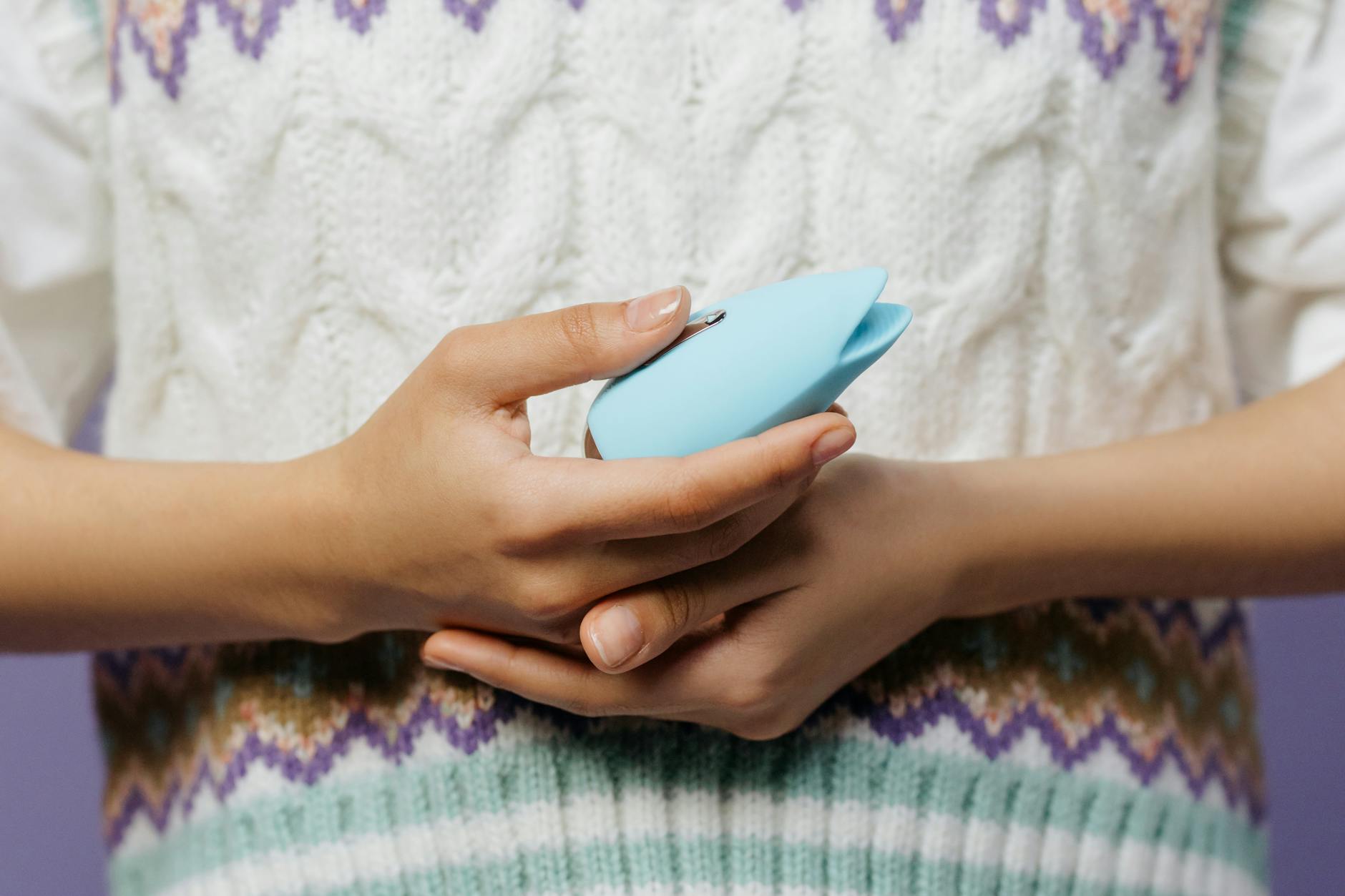
Photo by cottonbro studio on Pexels
The lemon clitoral vibrator works particularly well here because suction feels different from vibration. Some people find that vibration, after trauma, feels too intrusive or triggering. Suction is gentler, more diffuse. It stimulates the entire clitoral complex rather than a single point. That distributed sensation often feels safer to a nervous system that's been through something hard.
Working with intrusive thoughts during intimacy
One of the sneakiest parts of trauma recovery is intrusive thoughts during sexual moments. You're exploring sensation, and suddenly your brain serves up a memory. Or anxiety about what might happen. Or judgment about whether you should be enjoying this yet.
This happens to a lot of people, and it doesn't mean you're not healing. It means your nervous system is still a little on alert.
When it happens, pause. Don't push through it. Name what's happening: "My mind went somewhere else. That's not about this moment." Use the grounding technique again. Feel your feet. Notice the room. Then, if you want to continue, continue at a slower pace.
Some people find that using the Lemon with music, or a guided meditation, or a specific breathing pattern helps anchor them in the present. Experiment with what keeps you tethered to right now instead of pulled back.
The conversation with a partner, if you have one
If you're in a relationship, your partner needs to understand that healing isn't about them, but it will affect them. You might need more time alone with your own pleasure before partnered sex feels good again. You might need to take breaks. You might need them to know that some touch feels okay and some doesn't, and that might change week to week.
Many partners interpret this as rejection when it's actually the opposite. You're saying, "I'm building trust with my body again, and I need space to do that." That's vulnerable and important work.
When you do invite your partner back in, you can frame it clearly: "I'm starting to reconnect with sensation. I want to go slow. If I need to stop, that's just information, not a reflection on how I feel about you." This takes the pressure off both of you.
Some couples find that using a lemon vibrator together actually helps because it removes the pressure of performance. Your partner can be present while you explore, without the expectation of instant arousal or orgasm. That parallel intimacy, without demand, can be genuinely healing.
When to pause and seek additional support
If you're using a clitoral vibrator and consistently feel triggered, numb, or actively worse, that's not a sign the Lemon is wrong for you. It's a sign you might benefit from working with a trauma-informed therapist before adding tools to your healing.
Trauma work takes time. There's no deadline. Bringing a lemon vibrator into your pleasure recovery too early can actually slow progress if your nervous system isn't ready. That's not a failure. That's you listening to what you need.
Similarly, if numbness persists for months without any shifts, or if you're experiencing pain that wasn't there before, talk to a pelvic floor physical therapist. Sometimes trauma creates tension patterns that need direct attention before sensation work will feel good.
What rebuilding actually looks like
Here's the thing nobody tells you: reconnecting with pleasure after trauma is often better than it was before. You develop more awareness of your body. You learn your own patterns. You stop performing and start actually feeling.
Some people, after doing this work, report stronger orgasms than they've ever had. Some report that intimacy with a partner feels more genuine because they're not dissociating. Some just feel relief that their body still works, still feels, still belongs to them.
The lemon vibrator isn't the healer. Your nervous system's capacity to recover is. But a tool that's designed to feel good, that you can control completely, that stimulates rather than demands. That can be part of the path back.
This journey has its own timeline. Trust it.
People Also Ask
How long does it take for libido to return after trauma?
There's no standard timeline. Some people notice shifts within weeks of feeling emotionally safe. Others take months or years. Healing isn't linear. What matters is that you're noticing small changes and being gentle with yourself when they don't arrive on your preferred schedule. If you've been stuck for a long time, working with a trauma-informed therapist can help unstick things.
Is it normal to feel nothing when using a clitoral vibrator during healing?
Completely normal. Numbness is a protective mechanism. Using the lemon vibrator on low settings without any expectation of arousal is actually the right approach. You're rewiring the nervous system's relationship with sensation, not chasing orgasms. Feeling nothing this week doesn't mean you won't feel something next week.
Can a partner make healing harder if I'm not ready for sex?
Yes, sometimes. If a partner is pressuring you for sex or making you feel guilty about needing space, that's not supporting your healing. Healing requires your nervous system to feel genuinely safe. If your partner isn't respecting your boundaries, individual therapy or couples therapy with a trauma-informed counselor can help clarify what you both need.
Should I tell my therapist I'm using a vibrator during trauma recovery?
If you have a trauma-informed therapist, absolutely. They can help you time it right and make sure you're using it as a tool for reconnection rather than avoidance or self-harm. A good therapist won't be uncomfortable with this conversation. If yours is, that's useful data about whether you're working with the right fit.
What if the lemon vibrator triggers panic or flashbacks?
Stop using it immediately. This means your nervous system isn't ready for vibrator-based pleasure work yet, and that's fine. Stick with grounding and non-sexual touch for longer. You might try again in a few months. You might find that partnered touch, once you feel safe, works better for you than solo exploration. There's no single right path.
Can I use a lemon vibrator if I'm on antidepressants or anti-anxiety medication?
Most medications don't prevent you from using a vibrator, but some do affect sensation and arousal. If you're noticing numbness, talk to your prescriber about whether a dosage adjustment might help. If the medication is essential for your mental health, that takes priority over perfect sensation. You can explore pleasure at whatever level is available to you right now.
Moving forward
Reconnecting with pleasure after trauma is an act of reclaiming your body. You're saying: this body is mine. Its feelings matter. It deserves to feel good.
That's not selfish. That's essential. When you're ready to explore sensation again, a lemon vibrator can be a gentle, controllable part of that journey. Start low. Go slow. Listen to what your body actually tells you, not what you think it should feel.
If you need support navigating this next chapter, whether it's therapy, partner conversations, or just knowing you're not alone in this experience, reach out. Healing happens in community and in safety. Both are available to you.
Ready to explore at your own pace? We're here to support your journey, however you define it. Get in touch if you have questions about the Lemon or just want to talk through what feels right for you.