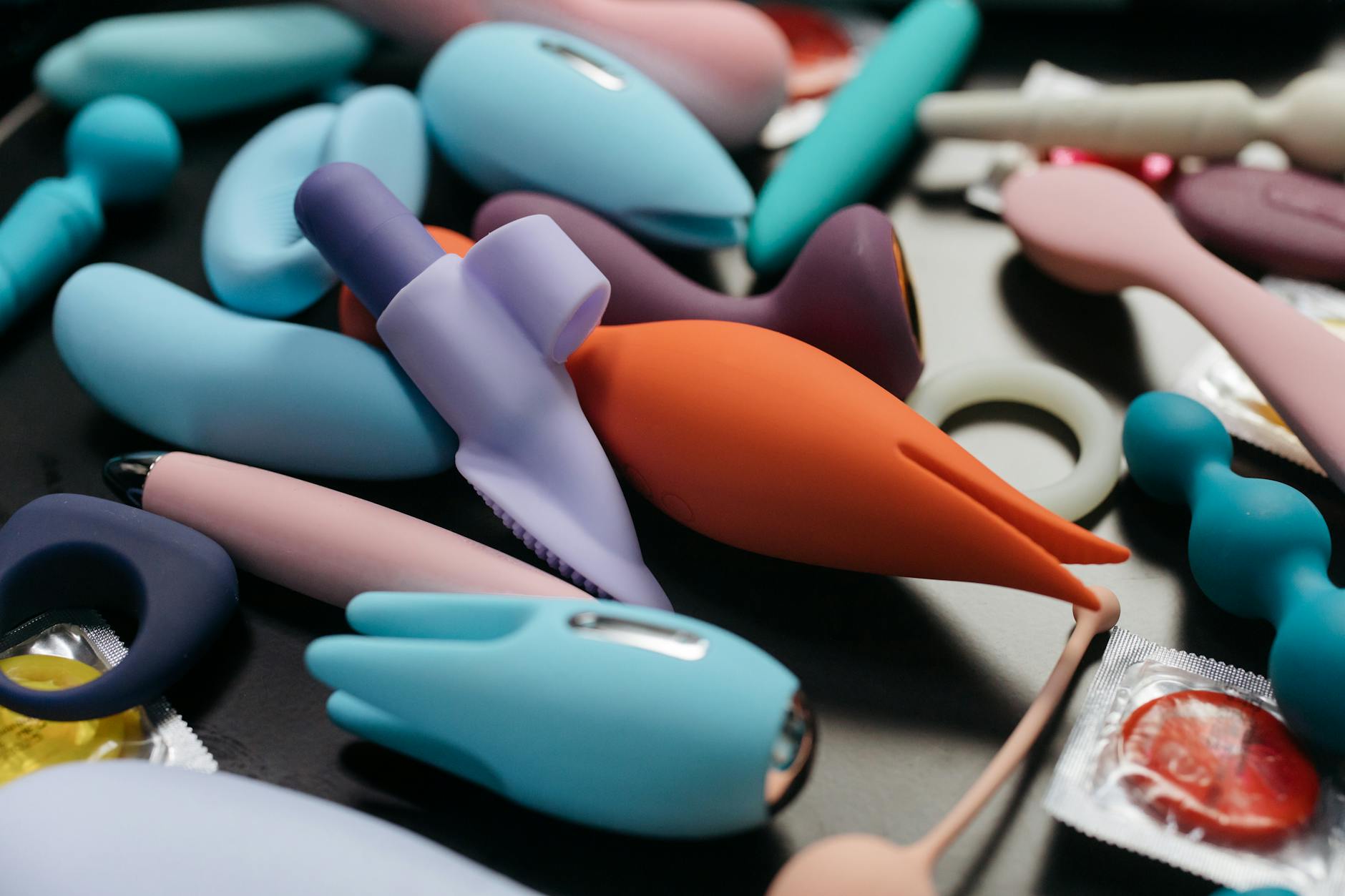
The resistance is real (and it's not what you think)
Honestly, the number one reason partners resist toys has nothing to do with the toy itself. It's the story they're telling themselves about what it means. "She needs this because I'm not enough." "He thinks I'm broken." "This is admitting our sex life is failing." Those are the actual barriers, not some deep objection to silicone or suction technology.
Which means the work isn't about convincing someone a lemon vibrator is good. It's about separating the toy from the shame narrative around it. That's totally doable. But it requires honesty about what you want and why.
Why partners push back (the real reasons)
I've worked with dozens of couples stuck on this exact issue. The resistance breaks down into four patterns.
1. Feeling replaced. Your partner thinks the toy is doing a job they're supposed to do. On some level, introducing a lemon vibrator feels like you're trading up. This is especially true if pleasure has been waning or if your partner already feels like they're not enough.
2. Performance anxiety. If sex has felt routine or disconnected, a toy can feel like evidence of that failure. Bringing it up feels like saying, "Our sex life is broken and you're the reason." Even if that's not what you mean, that's what they hear.
3. Unfamiliarity. Some people grew up thinking toys were shameful or weird. They might not have any frame of reference for what a lemon clitoral vibrator even is, let alone how it fits into partnered sex. Unfamiliar often reads as threatening.
4. Control. Some partners feel threatened by the idea that you can have pleasure independently. If all your sexual response has been tied to them, a toy that gives you pleasure on your own terms can feel destabilizing to their sense of importance in your life.
None of these are rational arguments you can win with logic. You win by reframing the entire conversation.
The conversation starter that actually works
Don't lead with the toy. Lead with what you want.
Instead of "I want to use a vibrator during sex," try: "I've noticed I take longer to finish lately, and I want to explore that together instead of ignoring it. I think it would help us both if we tried something that could help me get there faster."
Notice the difference. The first frames the toy as a solution. The second frames it as a tool for something you both want: connection and mutual satisfaction.
Then pause. Let them respond. Don't jump to defense or explanation. Let the silence sit for a moment.
Three things to say if they hesitate
"This isn't about you." And mean it. A lemon vibrator isn't a replacement. It's equipment. "I want this because my body responds better to certain kinds of stimulation, not because anything about you is wrong. This is about me getting to pleasure faster so we both enjoy it more."
"I want us to explore this together." Make it clear this isn't something you're doing to them, but with them. "I was thinking we could try it together and see how it feels. No pressure either way. I just want to see if this helps us both feel better during sex."
"Can I show you what it does?" Demystification reduces resistance. Let them hold a lemon vibrator. Show them the settings. Explain the sensation. "It's just a different kind of touch. It might actually feel good for you too, but that's not why I want it. I want it because it makes my body feel better." Sometimes seeing the actual object makes it less scary.
The practical integration (if they say yes)
If your partner agrees to try, don't immediately use the lemon vibrator during partnered sex. That's too high-stakes for someone who's still skeptical.
Start with solo exploration. Use it when you're alone so you know exactly how it feels and what you like. This serves two purposes. First, you become confident and comfortable with it, which your partner will sense. Second, you remove the pressure of figuring it out together for the first time.
When you do introduce it during partnered sex, pick a position or moment where it feels natural. If you're on top, you can use a clitoral vibrator easily. If you're side-by-side, you have control. Don't force it into a position where it's awkward or where your partner feels sidelined.
Verbalizing what's happening helps. "I'm using this because I want to come with you inside me," or "This helps me relax into the feeling." Narration makes it feel intentional and shared, not like something you're secretly doing.
What to do if they still say no
Sometimes the conversation doesn't land. Your partner isn't ready, or they're genuinely not interested in toys as part of your sexual dynamic.
That's a real boundary, and you have to respect it. But you also get to make decisions about your own pleasure.
You have three options. Use a lemon vibrator solo, outside of partnered sex. Talk to a couple's therapist who specializes in sexual intimacy and see if a professional can help reframe the conversation. Or decide whether this is a dealbreaker for you.
I don't say that lightly. Sexual compatibility matters. If your needs are fundamentally incompatible, that's real information. But often, what feels like a dealbreaker is actually a communication issue wrapped in shame. A good therapist can help you both separate those.
When resistance softens (and how to keep it that way)
If your partner comes around, the key to keeping them feeling secure is consistency and transparency. Use your lemon vibrator, enjoy it, and don't make it weird or secretive.
Don't suddenly become distant during partnered sex because you're focused on the vibrator. Keep eye contact. Keep touching your partner. The vibrator is a tool, not a replacement for the intimacy.
And sometimes, that intimacy deepens. Partners who were initially resistant often find that they love watching you feel pleasure. They like that you're more relaxed. They like that you come faster so you're both more engaged.
The resistance usually comes from fear, not from genuine disinterest in your pleasure. Once that fear dissolves, what's left is often closer connection than before.
FAQ
What if my partner thinks toys mean I don't love them anymore?
Love and sexual response are completely separate. You can love your partner deeply and also need specific types of stimulation to reach orgasm. One doesn't diminish the other. Sometimes the best conversation happens outside the bedroom. "I love you. My body works a certain way. A lemon clitoral vibrator helps me feel better during sex. Those facts are all true at the same time."
Can we use a lemon vibrator if my partner has low libido?
Yes, but differently. If your partner has low desire, bringing a toy into the mix might feel like pressure rather than connection. Instead, focus on rebuilding intimacy without the vibrator first. Once that foundation is stronger, you can introduce it as something that might make sex feel better for both of you, not as a solution to their low libido.
My partner watches me use a vibrator but won't touch me during it. Is that okay?
It depends on what feels right to you. Some people need a moment to adjust. Some people aren't comfortable with the visual yet. Others just like watching. If it feels distant or painful, name it. "I like that you're here, but I'd also love it if you touched me while I use this." If they still can't, that might point to deeper discomfort worth exploring with a therapist.
What if using a lemon vibrator actually improves our sex life?
It often does. Faster orgasms, more relaxation, better sensation, less performance pressure. These are all things that improve connection. Your partner might go from resistant to enthusiastic once they see the actual impact. That's how it usually plays out.
Can I use a lemon sucker during partnered sex without my partner feeling left out?
Completely. A lemon vibrator isn't about leaving your partner behind. It's about enhancing what's already happening. You're still having sex. You're still connecting. The vibrator is just the thing that gets you there. Frame it that way and most partners relax into it.
How do I know if my partner will ever be okay with toys?
You ask directly. "Is this something you think you could be open to exploring in the future, or is this genuinely not something you want in our sex life?" There's a difference between "not right now" and "never." One leaves room for growth. The other is a true boundary. Both are valid. You just need to know which one you're dealing with.
The thing nobody says out loud
Your partner's comfort matters. And so does your pleasure. Those two things don't have to be in competition.
Introducing a lemon vibrator when your partner isn't interested doesn't mean you're pushy or selfish. It means you're paying attention to what your body needs. That's actually the healthiest thing you can do for your relationship, because resentment about unmet sexual needs poisons everything else.
So have the conversation. Be honest about what you want and why. Listen to their fears without defending yourself. And then make decisions together, or separately, with full information.
That's what actual partnership looks like. Not agreement on everything. But honesty about what matters, and willingness to figure it out together.