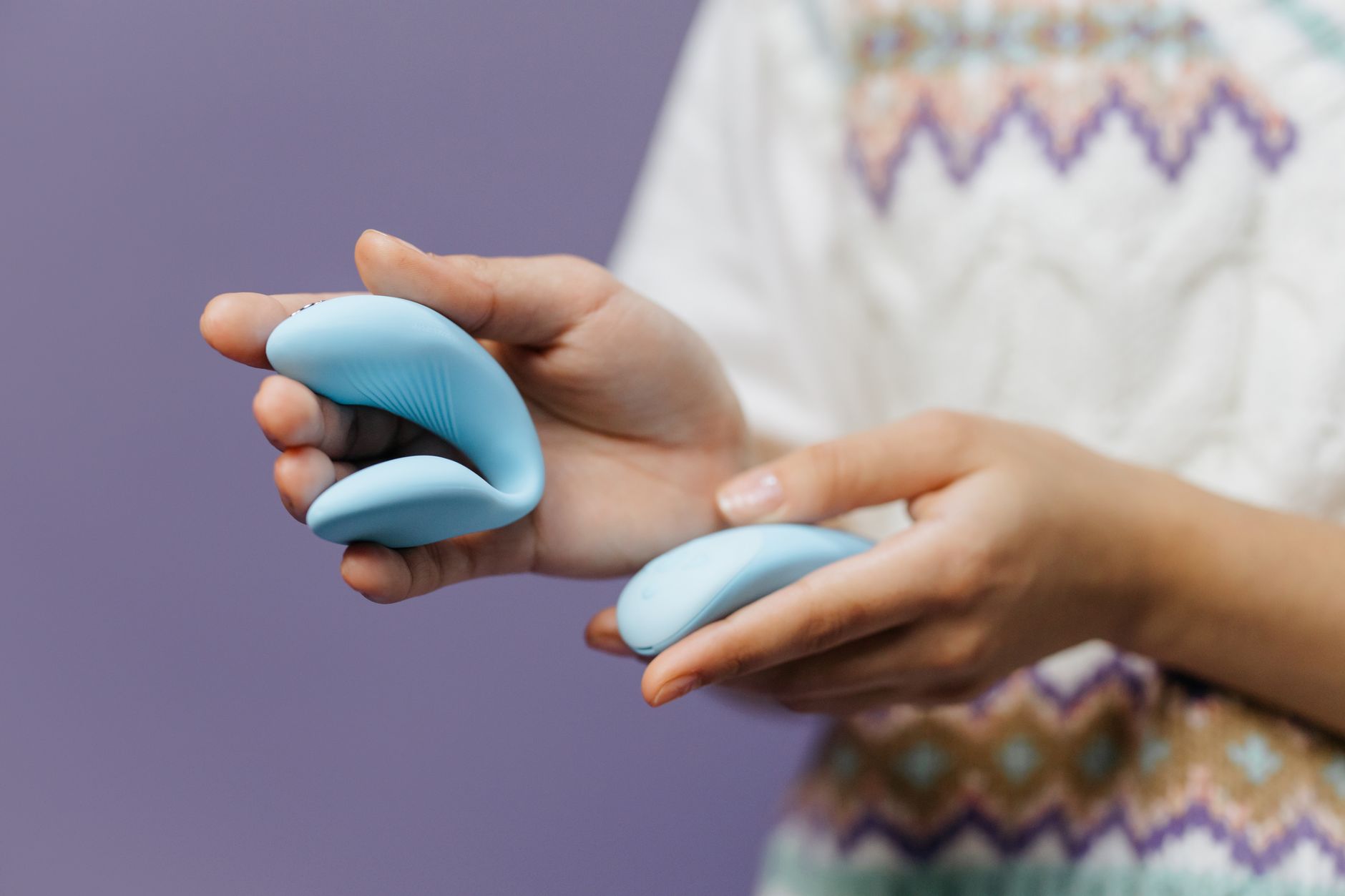
How to Use a Lemon Vibrator When You Have a Supportive Partner Who Wants to Help
Here's the thing about bringing a lemon vibrator into partnered sex: most people assume it's either a replacement for their partner or a prop to make sex "hotter." It's usually neither. When someone who cares about you wants to be part of your pleasure journey, the real work isn't figuring out the toy. It's figuring out the conversation.
I've worked with countless couples navigating this exact shift. The best outcomes happen when both people understand that a clitoral vibrator isn't a substitute for intimacy. It's an invitation to deepen it.
Why partners want to be involved (and why that matters)
A supportive partner who asks "Can I help?" or "Want to try something together?" is often coming from genuine investment in your pleasure. That's actually rare and valuable. But the impulse often comes tangled with worry: Am I enough? Will they prefer the toy to me? What if I can't make them orgasm anymore?
These fears are normal. They're also not true. But naming them early prevents resentment from building later.
My recommendation: before you even open the box, have a conversation that separates three things. One, what you want from solo exploration with a lemon vibrator (orgasms, sensation discovery, stress relief, whatever it is). Two, what you both want from partnered pleasure (connection, intensity, trying something new together). Three, whether those two things are different or the same. Most couples find they're different, and that's the healthy baseline.
The conversation before the toy arrives
Don't wait until you're undressed. Seriously.
When your partner asks about using a lemon clitoral vibrator together, here's what actually matters: clarity. "Yes, I want to try this" is not a complete sentence. Better versions sound like:
"I want to try a lemon sucker on my own first, to see how it feels and what I like. Then, if you're interested, I'd love to show you how it works and see if it's something we explore together."
Or: "I'm curious about using this together from the start. But I need you to understand that me orgasming differently doesn't mean you're doing anything wrong."
Or: "I'm nervous about this changing things between us. Can we check in after we try it?"
These are the kinds of sentences that actually prevent miscommunication. They're specific. They name a concern or a desire. They invite response.
Most couples don't have this conversation because it feels awkward or vulnerable. Then they try the toy, it goes sideways (or great, but weirdly), and they spend six months wondering what happened. Save yourself the confusion. Talk first.
When your partner holds the toy: who's actually in control
Here's where things get practical and honestly, a little surprising.
When you're using a lemon vibrator with a partner, there are really only two ways to do this: you hold it, or they do. Each changes the dynamic completely.
If you hold it, you maintain full control over pressure, speed, timing, and intensity. Your partner is present and engaged, but they're not steering. This is often the easiest entry point for couples. You get the benefit of their touch and attention without surrendering your own pleasure rhythm. You can also adjust instantly if something doesn't feel right. For people with a history of anxiety around partnered sex, or anyone who's had their boundaries crossed, this is usually the safer choice first.
If your partner holds the lemon clitoral vibrator, the dynamic shifts. You're trusting them with real-time adjustment. This can feel incredibly intimate, but it also requires a level of communication most couples haven't practiced. Your partner needs to know: Are you guiding them? Giving feedback? Trusting them to read your body? These details matter.
My suggestion: start with you holding it. Your partner can touch you elsewhere, kiss you, talk to you, watch. This keeps you in charge of your pleasure while inviting them into the experience. Once that feels natural, you can experiment with switching control.
The pressure to orgasm faster or harder
One pattern I see with couples trying lemon vibrators together: the partner sometimes feels like they need to "make" the orgasm happen faster or more intensely than it would alone. This creates pressure, which kills arousal. Ironic, but it happens constantly.
The reality is simpler. You might orgasm differently with your partner present than you do alone. Faster, slower, weaker, stronger, or just completely different. All of these are normal. Recognizing this upfront prevents disappointment.
What actually helps: Give your partner permission to step back. "If I'm taking a while, that's okay. You don't need to make this happen. Your presence is enough." Or: "I might need solo time with this to figure out exactly what I like, and then we can play together." These statements are trust-building.
Some couples find that a lemon vibrator actually gives the partner something active to do, which reduces performance pressure for both of you. Instead of "Am I doing this right?", it becomes "How is this feeling? Want it faster?" The toy becomes a conversation starter.
What to actually expect the first time
Be real with yourself: the first time you use a lemon vibrator with your partner will probably feel a little awkward. You might giggle. You might feel self-conscious. You might wonder if it's working. You might get distracted by whether they're enjoying watching.
This is all completely normal and honestly, kind of a feature, not a bug. The awkwardness is part of trying something new together. It softens the stakes. You're not performing for each other. You're figuring something out together.
Set yourself up for success: dim lighting (so you feel less observed), maybe some music, privacy (no risk of interruption), and realistic expectations. "This might feel great or it might be weird. Either way, we try it" is the right headspace.
Also, boundaries: talk about what you're not doing. Some couples want penetration plus the lemon sucker. Others prefer clitoral focus only. Some want to stay clothed. Some want full skin contact. There's no "right" way. There's only your way.
Building pleasure without comparison
Honestly, the biggest risk when you introduce a lemon vibrator into partnered sex isn't that it will feel bad. It's that it will feel so good that both of you start wondering why you weren't doing this before.
And then the partner feels inadequate. And then you feel guilty for enjoying it. And then the toy sits in a drawer.
Don't let that be you.
A lemon clitoral vibrator is not "better" than your partner's hands or mouth or body. It's different. It accesses sensation in ways a human hand can't, because it's not trying to be a hand. Pleasure isn't a zero-sum game. Your partner can be present and invested while the toy does what a toy does best.
Here's what I tell couples: the goal isn't to replace one thing with another. The goal is to expand your pleasure vocabulary together. When you do that, you actually deepen intimacy, not threaten it.
When to go solo, when to go together
Most healthy couples using lemon vibrators together end up creating a rhythm: sometimes solo exploration, sometimes partnered play.
Your body might need solo time to learn the toy without distraction. Your mind might need to feel fully in charge sometimes. Your relationship might need the richness of both experiences. Solo exploration teaches you what you like. Partnered exploration teaches you how to communicate about desire.
They're not interchangeable. They're complementary.
I typically recommend: one to two weeks of solo exploration first. Get to know the lemon sucker's settings, your own response, what feels good. Then, invite your partner in with permission to step back if it's not working. Then, let it become whatever rhythm makes sense for both of you.
Some couples use a lemon vibrator together weekly. Others use it for specific moods or moments. Others discover that solo time with it is what they value most, and partnered sex stays partner-focused. All of these are fine. The point is intentionality, not obligation.
The conversation after
Honestly, this matters as much as the conversation before.
After you've tried using a lemon vibrator with your partner, check in. Not days later. That evening, or the next morning. "How did that feel for you? What surprised you? What do you want to do differently?" These questions invite honest feedback and prevent miscommunication from calcifying into resentment.
If it felt amazing, say that. If it felt awkward, say that too. If you want to try again, or if you want to wait, or if you want to adjust something, now is when you say it.
My clients report that this conversation is sometimes more intimate than the sex itself. You're naming what you felt, what you wanted, what you're curious about. You're being known. That's the real payoff.
FAQ: Lemon Vibrators and Partnered Pleasure
Can we use a lemon clitoral vibrator if we've never used a toy before?
Absolutely. A lemon vibrator is actually a gentle entry point for couples exploring toys together. It's designed for clitoral stimulation, which is straightforward and doesn't require much coordination or discussion. Start with lower intensity settings, keep communication open, and remember that trying something new is vulnerable for both of you. That vulnerability is where intimacy grows.
What if my partner feels threatened by the lemon vibrator?
This is more common than people admit. Often it's rooted in outdated ideas about what "real" sex looks like, or insecurity about whether they're enough. The best response is honest conversation before you even use the toy. "This isn't about you. This is about my pleasure, which I'm choosing to share with you." If your partner continues to feel threatened after you've explained, that might point to a deeper insecurity worth exploring together with a therapist. A toy isn't a relationship problem. It can reveal one, though.
Should I orgasm faster or harder with a lemon vibrator when my partner is involved?
Not necessarily. Pressure to perform actually kills arousal. Your body might respond differently with your partner present. You might feel more or less sensation. You might need different kinds of touch or stimulation. All of this is normal. The gift of using a lemon sucker together is that you're both learning how your body responds in different contexts. That information is gold for future intimacy.
Can my partner use the lemon vibrator on me while we have other kinds of sex?
Sure, if that appeals to both of you. Some couples combine a lemon clitoral vibrator with penetration. Others prefer clitoral focus only. Some use it before sex, some during, some after. There's no rule. What matters is that you've both agreed and that you're both enjoying it. If it stops feeling good for either of you, you can always adjust or stop.
What if I want to use a lemon vibrator alone sometimes, but my partner feels excluded?
Then you get to have another conversation. "I need solo time with this to explore on my own. That doesn't diminish what we do together. It just means I want both experiences." A supportive partner will get this. Solo pleasure isn't a threat to partnered pleasure. They're different categories of experience. If your partner struggles with this boundary, it's worth exploring why.
How do I know if using a lemon vibrator together is improving our sex life or just covering up problems?
Good question. New toys can feel exciting in ways that make existing relationship dynamics temporarily feel better. But if you're arguing about sex, not attracted to each other, or avoiding intimacy, a lemon clitoral vibrator won't fix that. It might make it more obvious. If you suspect deeper issues, couples therapy alongside toy exploration is a solid move. The toy can be part of rebuilding intimacy, but it's not a substitute for addressing actual relationship problems.
Introducing a lemon vibrator into your partnered sex life isn't about fixing anything or proving anything. It's about expanding what pleasure can look like when two people are willing to be curious together. That willingness is the real gift.