
Let's talk about the spontaneity myth
Here's what nobody tells you: the expectation that arousal should just happen is one of the biggest killers of actual desire. You're supposed to want sex randomly, passionately, without thinking. That script stops working for most people around 35, and it doesn't come back online.
But this isn't a problem. It's actually an opportunity.
Why spontaneous arousal disappears (and why that's normal)
Spontaneous desire—the kind that just arrives without context—relies on specific neurological conditions: novelty, low stress, brainspace, and stable dopamine. Life with bills, work, aging bodies, and real relationships? That environment doesn't create spontaneous arousal. It creates responsive arousal—desire that builds when you engage with it, not before.
Most of us grew up thinking responsive desire was a failure state. It's not. It's actually more sustainable. And the shift from spontaneous to responsive is one of the reasons tools like lemon vibrators become so valuable in your forties and beyond.
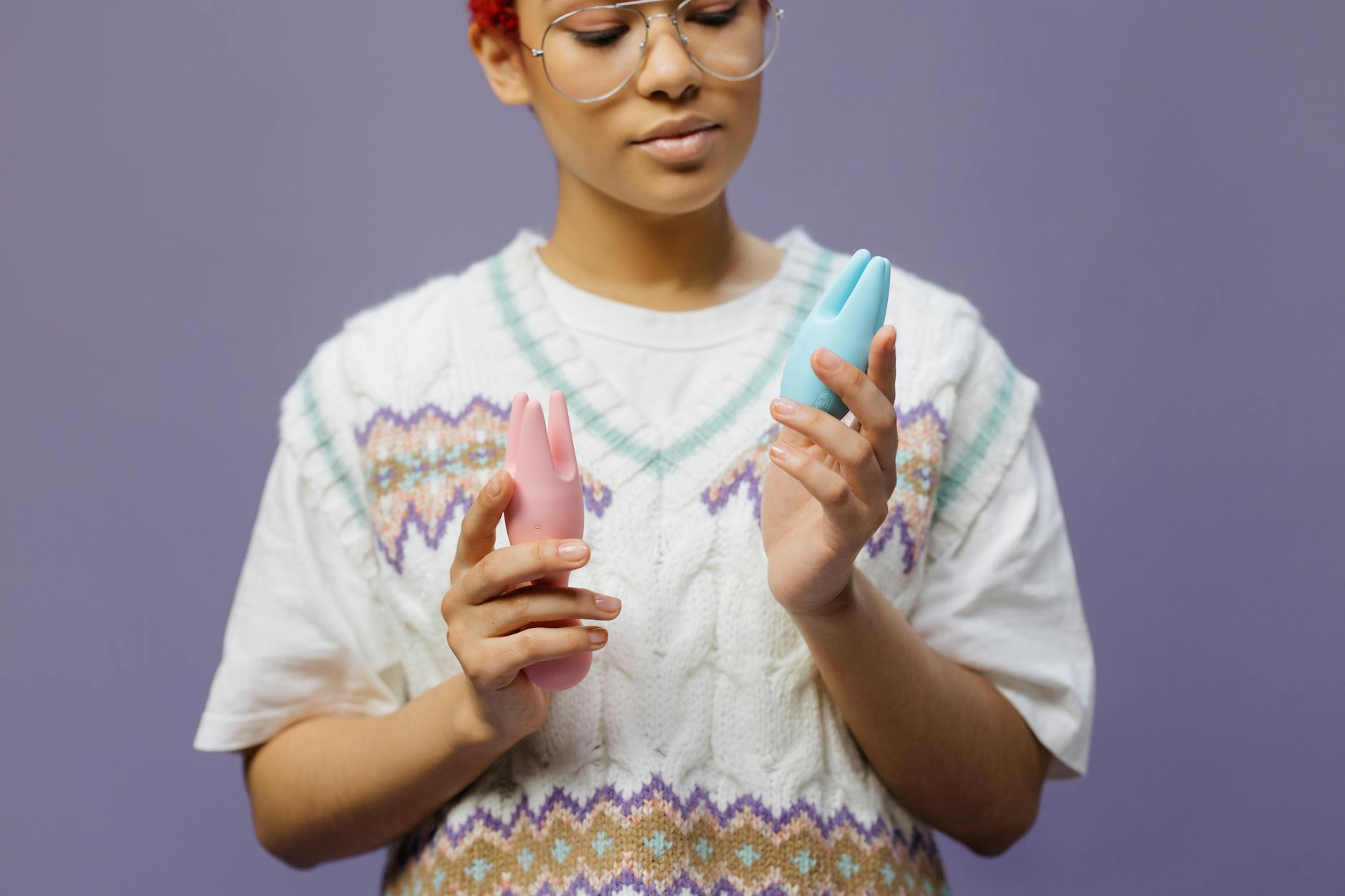
Photo by cottonbro studio on Pexels
The control problem nobody's naming
When you stop being spontaneously aroused, something else happens: you lose the sense that pleasure is happening to you. You have to initiate it. You have to choose it. And that shift from passive recipient to active creator can feel like a burden if you're not framing it correctly.
The real issue isn't the loss of spontaneity. It's the loss of control you experienced when arousal was automatic. You weren't responsible. Now you are. That's heavy.
A lemon vibrator, paradoxically, gives you control back. Not by making arousal spontaneous again, but by making the intentional route feel so good that you stop resenting having to choose it.
Why intention actually builds better intimacy
Let me be direct: couples who schedule sex and plan pleasure report higher satisfaction than couples who wait for spontaneous moments. This isn't romantic, but it's real. Scheduled sex means you both show up. You both anticipate. You both have brainspace.
When you use a lemon clitoral vibrator deliberately—meaning you set a time, you communicate the plan to your partner, you clear distractions—something shifts. You're no longer waiting for your body to behave. You're authoring the experience.
That shift from passive to active is where the real control lives.
How to move from spontaneous to intentional pleasure
Step 1: Separate the conversations. "I want us to be sexual again" and "My body doesn't respond to spontaneous touch anymore" are two different statements. Have the second conversation first, alone or with a therapist. Get clear that this isn't about your partner's attractiveness. It's about how your nervous system works now.
Step 2: Choose a regular time. This sounds clinical and it is. Intentional sex works because it's predictable. Your nervous system can prepare. Your body can anticipate. Pick a day—Thursday nights, Sunday mornings, whatever fits your life—and protect that time like you'd protect a work meeting.
Step 3: Set the environment deliberately. Spontaneous sex happens in wrinkled sheets at 11 p.m. Intentional sex happens when you light a candle, lock the door, and have lube nearby. These aren't romantic additions. They're logistical necessities that tell your body: this is real, this is allowed, this matters.
Step 4: Start with the clitoral vibrator solo. Before you involve a partner, use your lemon vibrator alone for at least two weeks. Learn how much time you need, what intensities work, what patterns feel best. You're mapping your own responsive desire, not your partner's expectations.
Using a lemon sucker when control is what you need
Suction-based vibrators like lemon toys are particularly helpful for intentional sex because they give you precise feedback. You can feel exactly what's happening. There's no guessing about intensity or angle.
Start on a lower pattern (1 or 2) and stay there for longer than you think you need. Responsive arousal builds slowly. You're not looking for the fastest route to orgasm. You're training your nervous system to recognize pleasure again.
One technique that works: use the vibrator for 10-15 minutes without expecting an orgasm. The point is sensation, not outcome. This removes the performance pressure that kills responsive desire.
If your partner is present, they can help by providing other stimulation (touch, kissing, massage) while you use the toy. The combination of multiple sensations actually triggers arousal more reliably than a single touch would.
What to do if resentment shows up
Most people who move from spontaneous to intentional sex hit a moment where they feel angry about it. You shouldn't have to plan this. It should just happen. Your partner should want you spontaneously.
That resentment is real, and it's worth feeling fully. But it's also separate from your pleasure. You can acknowledge the loss while building something better.
This is where talking with a therapist about restarting sex after a relationship shift becomes valuable. Resentment usually means something else is unresolved in the relationship—connection, attention, reciprocity. The vibrator can't fix that. Only conversation can.
Building anticipation as foreplay
Here's a secret: anticipation is arousal in responsive desire. When you know you have a date scheduled, your brain starts priming itself days in advance. Text your partner during the day. Reference the evening ahead. Share what you're thinking about trying.
This extends the arousal window from 20 minutes (when you're suddenly naked) to several days. Your nervous system has time to shift gears. When you actually get to the vibrator, you're already halfway there.
Making intentional sex feel less like a chore and more like something you're excited about is the real work. The lemon vibrator is just the tool that makes the excitement feel good.
FAQ: Control and intentional pleasure
How long does it take for responsive arousal to kick in if I'm used to spontaneity?
Two to four weeks of consistent, scheduled sessions. Your nervous system needs repetition to learn that this time is safe and dedicated. Don't judge it in the first week. By week three, most people notice a difference.
Can my partner be present while I use a lemon clitoral vibrator if that's when I'm most responsive?
Absolutely. Many people find that having a partner present (touching them, talking to them, just being there) helps arousal build. The vibrator does the clitoral work. Your partner does everything else. This is actually one of the most effective ways to rebuild couples' intimacy when spontaneity has disappeared.
What if my partner wants spontaneous sex and I don't anymore?
That's a conversation, not a problem. You're describing different nervous systems at different life stages. Some people maintain spontaneous desire throughout their lives. Others don't. Both are normal. The solution is usually compromise: you schedule regular intentional sex, and you stay open to spontaneous moments when they happen—but you don't make spontaneity the baseline expectation.
Is using a tool like a lemon vibrator a sign that something's wrong with our relationship?
No. Using intentional pleasure tools is a sign that you're prioritizing intimacy despite life making it harder. That's actually a strong relationship move, not a weak one.
Can I use a lemon sucker during partnered sex if I'm uncomfortable with solo stimulation?
Yes. Many people only use vibrators during partnered sex, never alone. That's fine. Start there if that's more comfortable. Just know that solo exploration helps you learn what works, which makes partnered sessions more satisfying.
How often should we schedule intentional sex if responsive arousal is slower for me?
At minimum once weekly. More often is fine, but weekly gives you a predictable rhythm without it feeling like work. You can adjust based on what feels sustainable and pleasurable for both of you.
The real win
Moving from spontaneous to intentional pleasure isn't a downgrade. It's a lateral move into adulthood. Your body doesn't produce arousal on command anymore because your life is more complex, your attention is divided, and your nervous system has learned caution.
But that same nervous system can learn that intentional time is safe. That control is yours. That a lemon vibrator isn't a substitute for lost spontaneity—it's a tool that makes deliberate, chosen pleasure feel as good as the automatic kind used to.
Start by choosing one time this week. Set the space. Use the tool. Notice what happens when you stop waiting for desire and start creating it instead. That's when the real control returns.