
Let's talk about what breakups do to pleasure
When a relationship ends, people focus on the emotional fallout. The heartache, the routines that suddenly have a hole in them, the texts you don't send. But there's something else happening in your body that nobody talks about: your nervous system is in mourning too. You've spent months or years responding to someone else's touch, someone else's timing, someone else's breath. Now that person is gone, and your body is confused.
Some people feel a surge of sexual hunger afterward, which they interpret as healing. Other people feel nothing. Both are normal. What matters is knowing that pleasure after a breakup isn't about being "ready" in some emotional sense. It's about reconnecting with sensation on terms that belong only to you. A lemon clitoral vibrator can be that bridge.
I've worked with hundreds of people rebuilding their relationship with pleasure after heartbreak. The ones who succeed fastest aren't the ones who jump into new partners. They're the ones who get reacquainted with their own bodies first. That's where this starts.
Why your body feels unfamiliar right now
Your nervous system doesn't care about the relationship ending on a calendar. It cares about what happened in that bed, in that shower, on that couch. When someone else's touch was your primary form of sexual contact for an extended period, your body learned to associate pleasure with their presence. When they disappear, so does the automatic pathway.
This isn't about losing ability. You haven't forgotten how to have pleasure any more than you've forgotten how to breathe. What's happened is that the familiar trigger is missing. Your own hand, or the idea of solo play, can feel weirdly distant or even sad because it's what you used to do before, not what you've been doing.
Add to that the fact that many people suppress their own pleasure during relationships. You might have been calibrating around a partner's preferences, their timing, their comfort. Your own pace got quieter. Solo pleasure can feel like remembering a language you almost forgot you spoke.
That's where a tool like a lemon vibrator comes in. It gives your nervous system something new to learn. Not nostalgia. Not memory. Just clean sensation.
Starting from zero: the first time back
Honestly, the first solo session after a breakup shouldn't have a goal. Not orgasm, not intensity, not even arousal. The goal is just sensation. Can you notice what your body responds to? Can you be curious instead of critical?
Start somewhere low. Set a time when you won't be interrupted. The lemon vibrator has a few distinct patterns, so begin on pattern 1 or 2. The pressure should feel like invitation, not demand. You're literally relearning your own geography.
Many people find that it takes 15-25 minutes before the body starts to relax. Grief holds tension in strange places. Your pelvis might be tight. Your breath might be shallow. The vibration can help soften that, but you have to give it space.
If nothing much happens, that's data, not failure. Your body is processing the absence of someone else's presence. Repeating this solo, in your own space, is how you teach your nervous system that pleasure is safe again. It doesn't have to earn it through someone else's approval.
The middle ground: reclaiming sensation without comparison
After a few sessions of just noticing, you can start to explore what actually feels good. And here's the thing nobody tells you: you might discover entirely new sensations now. Your body has matured. Your preferences might have shifted.
A lemon clitoral vibrator works through suction and pulsation, which is fundamentally different from the friction or pressure you might have experienced with a partner. This is actually useful. Your nervous system gets to build new pathways instead of constantly reaching for the old ones.
Try different patterns. Linger longer on the ones that create a curious feeling, not just physical pleasure. The curiosity is where your agency lives.
Many people in this phase also find that they're not ready for a particular kind of intensity that mirrors partnered sex. If you spent years using one rhythm or style, trying the exact same thing now can feel like ghosting. Instead, give yourself permission to want something completely different. Gentler. Faster. More varied. This is how you stop being someone's ex in bed and start being your own lover again.
Separating pleasure from loss
Here's the hardest part, and I want to be direct about it: sometime in the next few weeks, you'll probably cry during this. Or you'll finish and feel inexplicably sad. Or you'll realize mid-session that you miss them.
That's not a sign that solo play is wrong. That's your nervous system processing the gap between what was and what is. Those feelings can coexist with the pleasure. You can feel good and grieving at the same time.
When that happens, pause. Take a breath. Maybe you stop, or maybe you keep going. There's no rule. But notice that the lemon vibrator is still there, still responding to you, still yours. The loss is separate. The pleasure is something you get to keep.
Building a rhythm that's actually yours
After a few weeks, you'll probably land on something like 2-3 sessions a week that feel natural. That's not because you're healing on a schedule. It's because you're learning what your body wants when no one else is involved.
Some people find they want afternoon play when the light is good. Others want late night, slow sessions. Some people want to use the lemon vibrator as part of a broader self-care ritual. Others want it quick and focused. None of this is better. It's just what works for you.
The fact that you get to choose every part of this. That's the point. After months or years of negotiating around someone else, your body gets to be selfish. Loudly. Without apology.
When you're ready to explore partnered pleasure again, and that's not for a while yet, you'll have something the lemon vibrator gave you: a baseline of what you actually like. No comparison, no echoes of someone else's rhythm. Just you.
Practical things that help
A few tactical notes from what I've seen work:
Privacy matters more than you think. Knowing nobody will walk in, nobody will check your phone, nobody will ask later. Carve out actual space for this, not just time.
Lube is your friend. Even if you don't think you need it, a little water-based lube makes everything feel smoother and safer. It's not about arousal level. It's about tissue care.
Start early in the week, not when you're already tired. You want your nervous system engaged, not sleepy. Morning or early evening often works better than late night.
Don't check in with yourself too hard. "Am I getting turned on yet?" is the fastest way to make the process feel like a performance. Just let sensation be sensation.
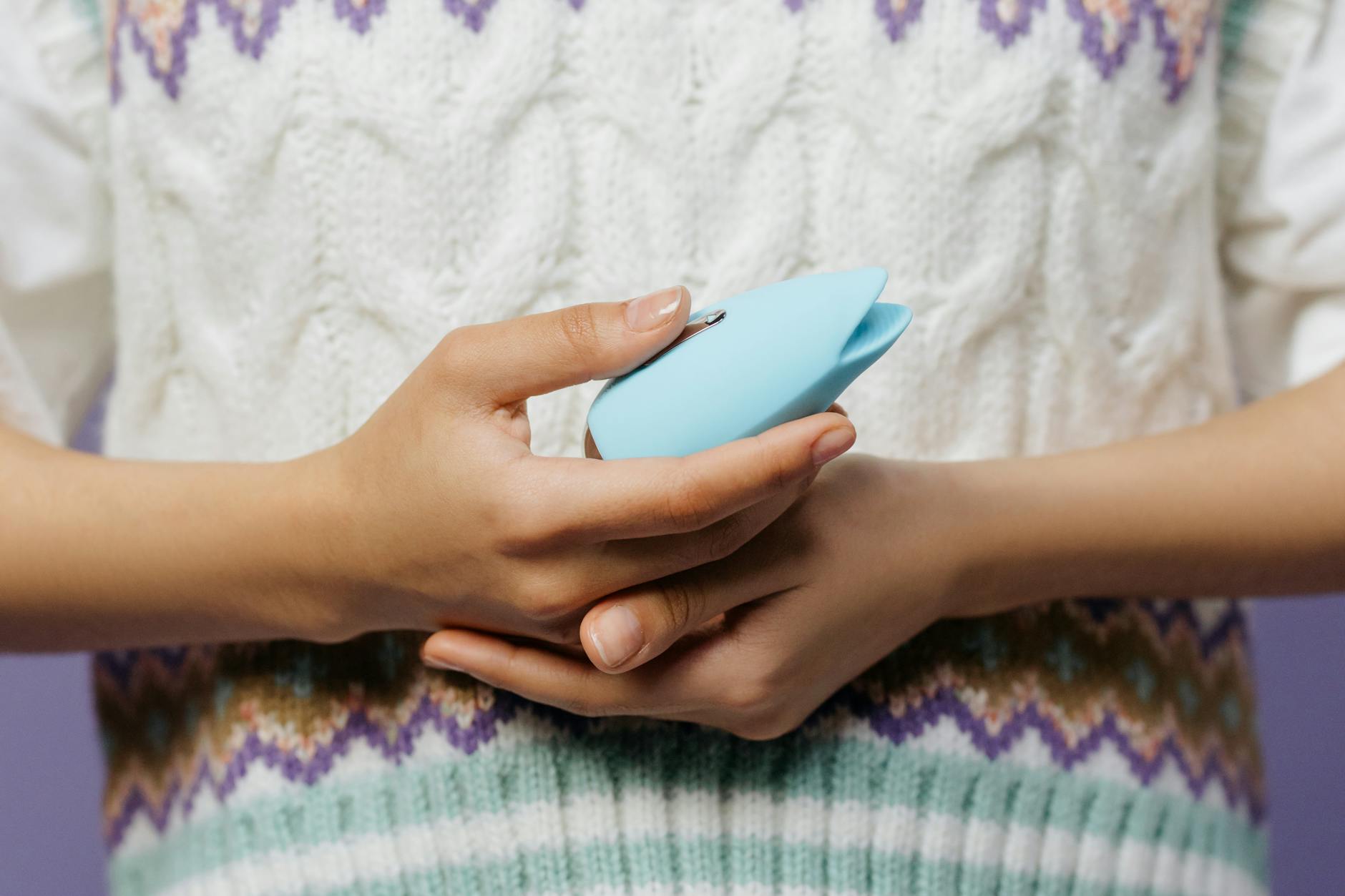
Photo by cottonbro studio on Pexels
When comparison creeps in
At some point, you might wonder if this is "normal" or if something is wrong. You might think about how sex was before, or imagine how it might be next time, and feel less than.
That's the grief talking. Here's what's actually true: pleasure after a breakup is almost always different from pleasure during a relationship. Different doesn't mean broken.
If you find that you're stuck in comparison, or that nothing is building, talking to a therapist who specializes in sexual health can genuinely help. There's no shame in it. Sometimes our bodies hold onto relationship patterns longer than we expect, and professional support helps unlock that.
But most of the time, the lemon vibrator does what it's designed to do: it gives your nervous system a safe, non-judgmental way to remember that pleasure is yours. Not something someone else controls or validates.
FAQ: Coming back to pleasure after heartbreak
How long does it usually take to feel normal pleasure again?
There's no standard timeline. I've seen people feel reconnected to pleasure within a few weeks of consistent solo play. Others take two or three months. The metric that matters isn't how fast it happens, it's that it's happening at all. If you're noticing any new sensation, curiosity, or arousal over a few weeks of consistent practice, you're on track.
Is it weird if the lemon vibrator feels better than being with my ex was?
Not even slightly. A lemon clitoral vibrator is designed specifically for the mechanics of your pleasure. It has no mood. It doesn't need reassurance. It doesn't get tired. It's optimized for sensation in a way that many partnered experiences aren't. That's completely normal to notice, and it's valuable data about what you actually want moving forward.
What if I feel sad or empty after using the lemon vibrator?
That's common in the weeks immediately after a breakup. Your body released a lot of tension, and your nervous system is noticing the absence of someone else. Sadness doesn't mean the practice is wrong. If anything, it means you're processing. Let yourself feel it. The emptiness usually shifts to a kind of peaceful solitude after a few sessions.
Can using a lemon vibrator solo make it harder to feel pleasure with a future partner?
No. If anything, the opposite. When you know what your own body actually responds to, you can communicate that to a future partner. You're not trying to match someone else's rhythm or guess what they want. You know your own baseline. That makes partnered pleasure clearer and easier.
Should I tell a future partner that I used a lemon vibrator to rebuild pleasure after my breakup?
That's entirely your choice, and it depends on the partner and the relationship. Some people find it interesting and even hot. Others don't need to know. What matters is that you know. You get to keep that piece of your own healing.
How do I know if I'm ready to explore partnered pleasure again?
The honest answer: when you stop needing it to fix the breakup. When solo pleasure feels complete, not like a placeholder for what you lost. When you're curious about someone else's pleasure because you want to, not because you want to feel wanted again. That usually takes a few months, sometimes longer. Trust your own timeline.
The point of all this
Your body doesn't belong to anyone else now. Not your ex. Not future partners. Not the voice in your head that says you should be "over it" by now. It belongs to you.
A lemon clitoral vibrator is just a tool. The real work is giving yourself permission to feel good on your own terms. To be curious. To take your time. To mess up the timing and try again.
That's how you don't just survive a breakup. That's how you come out of it knowing more about yourself than you did before.