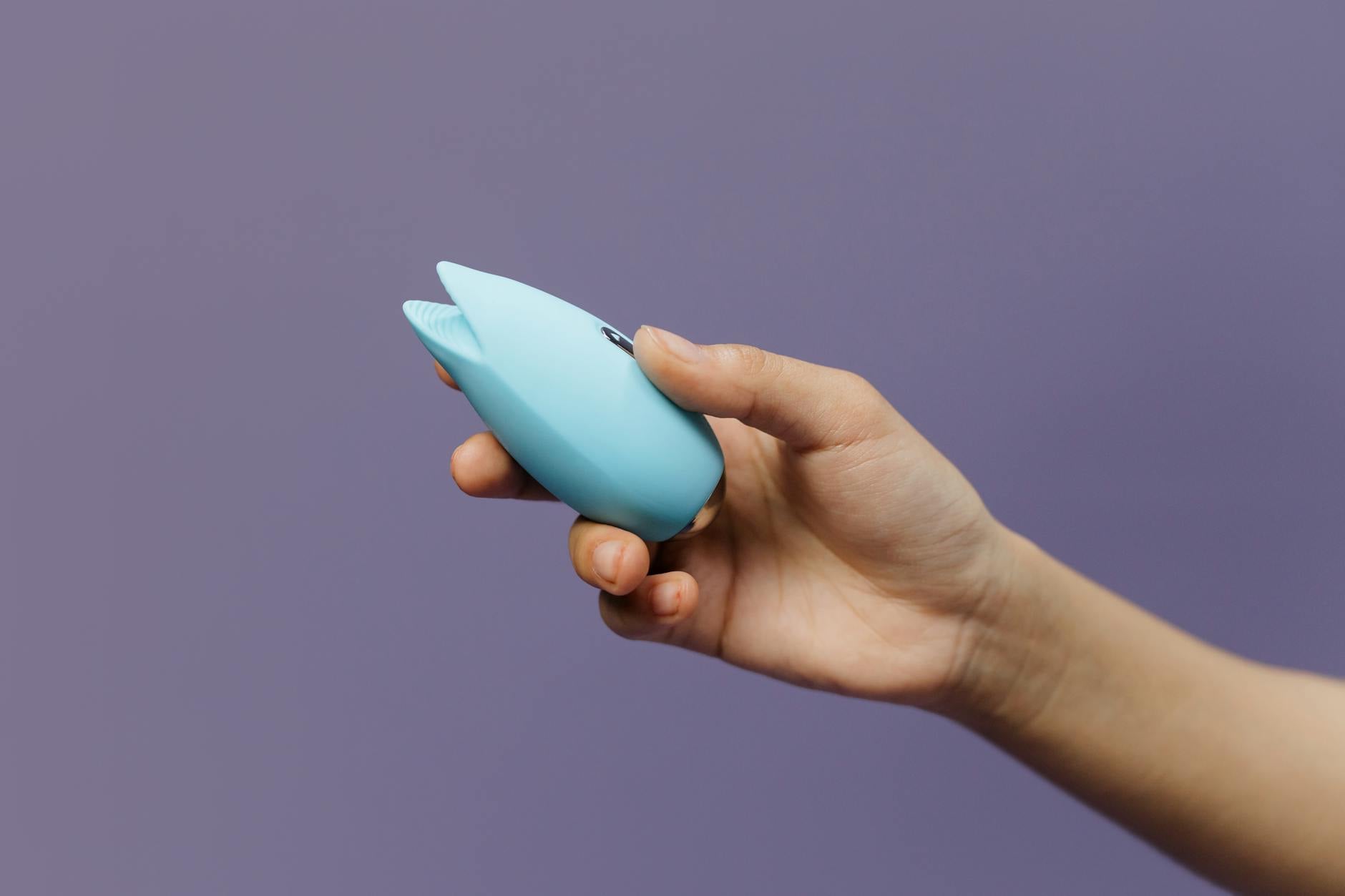
Let's be real about the fear
You want to bring a lemon clitoral vibrator into your sex life with your partner, but you're worried it signals something is wrong. That they'll feel replaced. That mentioning it will crater the mood or start a fight you don't want to have. So you don't say anything, and the idea just sits there taking up mental space.
Here's what I've learned from years of working with couples: the thing you're afraid to say is almost never as threatening as you think it will be. And the conversation itself, if you frame it right, often becomes foreplay.
Why partners resist toys (and why it's usually not about you)
When someone who's never used a vibrator hears "I want to bring a toy into our sex life," they often hear one of three things:
First, "I'm not satisfied." Second, "You're not enough." Third, "This is weird and I didn't know that about you." None of these are true if you frame the conversation around curiosity and shared pleasure, not lack.
The actual resistance usually comes from somewhere simpler. Your partner might feel insecure because they think toys are for people without partners, or they worry they won't know how to use one, or they've simply never considered it as an option. These are all fixable.
The deeper thing: many people grow up thinking good sex should just happen, that needing tools or talking about it means something is broken. Breaking that belief is the whole conversation.
The setup conversation (timing matters more than you think)
Don't bring this up mid-argument, after a disappointing sexual encounter, or when you're both tired. That's like trying to assemble IKEA furniture at midnight. Pick a time when you're both relaxed and connected but not actively aroused. A Saturday morning coffee. A walk. Sitting in bed before sex, not during.
Start with genuine curiosity about them, not about the toy. "I've been thinking about what turns you on lately." Or: "I want our sex life to feel more exciting for both of us." This opens the door without immediately pointing to the solution.
Then, if they seem open, you can introduce the idea. "I've been reading about clitoral vibrators, specifically lemon vibrators, because I've heard they work differently than other toys." You're not confessing. You're sharing information.
What to actually say (and what absolutely not to say)
Good opening: "I've been curious about exploring more together, and I found something I want to try with you." This is collaborative from sentence one.
Also good: "I think we could have even better orgasms together if we experimented a little." You're framing it as a benefit for both of you, not a fix for what's broken.
Not good: "Sex has been kind of boring, so I want to get a vibrator." This sounds like criticism. It is criticism.
Also not good: "Everyone's using these now." This makes it seem trend-driven and removes the intimacy from the choice.
Better: "I read that lemon clitoral vibrators work through suction, not just vibration. The sensation is supposed to feel completely different. I want to try it with you." This is specific, informative, and makes it clear you've done actual thinking, not just impulse shopping.
Addressing the specific fears (without being defensive)
If they say, "Do you not like sex with me?" here's the move. Don't defend yourself. Redirect to them.
"That's not it. I actually love sex with you. What I'm saying is: I think we could both feel more. I want to see what your orgasm looks like when we add something that does something I physically can't do." This reframes the toy as an addition, not a replacement.
If they're worried they won't know how to use it: "We'll figure it out together. That's the fun part." If they're embarrassed or shy about the idea: "I know it feels awkward talking about it. But I think the weirdness goes away the second we actually try it." You're right, and they usually know it.
If they worry about the lemon vibrator being too intense or unusual: "These toys are designed for comfort and sensation, not shock value. And we control the settings entirely." Concrete reassurance beats vague promises.
The practical introduction (when you both say yes)
Don't just pull out a lemon clitoral vibrator the next time you're in bed. That's jarring and makes it transactional. Instead, introduce it outside the bedroom first.
Show them the device when you're both clothed and not in a sexual context. Let them hold it. Ask what they think. Let them understand it's not scary or weird, it's just a tool designed for pleasure. Most vibrators and suction toys look modern and elegant when you're not anxious about them.
Talk about settings. If it's a lemon vibrator with multiple intensities, run through them together so they understand how it works. This kills the mystery and removes fear.
Then, when you're both ready to be intimate, introduce it gradually. Don't start with it. Start with hands, with kissing, with the usual foreplay. Once you're both aroused, bring the vibrator in. Let your partner use it on you first so they see what it actually does and get comfortable with the mechanics.
Making it feel connected (not clinical)
The moment you bring the toy into bed, you're making a choice: this can feel clinical and mechanical, or it can feel like deepening intimacy. The difference is presence and communication.
Talk during. "How does this feel?" "Can you feel the difference?" "What should we change?" This keeps it conversational and connected rather than watching-a-demonstration.
If they want to use it on you, let them. Guide their hand gently. Make sounds so they know what's working. Make eye contact when you can. All of this tells your partner they're still central to what's happening, not replaced by technology.
Some couples find it's hotter if they're touching each other while the vibrator is involved. Hands on each other, eyes locked, toy in the mix. That's probably the ideal for your first time together, because it keeps the intimacy quotient high.
After the first time (the follow-up conversation is crucial)
Don't just pretend it didn't happen. That teaches your partner there's shame attached to it.
The next day, in a normal moment, bring it up lightly. "That was fun. I liked when we..." Be specific about what worked. Ask them what they felt, what surprised them, what they want to try differently next time.
If they didn't love it, that's okay. Not every tool works for every body. But the conversation itself has shifted now. You've proved that talking about desire isn't dangerous. That exploring together is normal. That sex isn't something that just happens to you, it's something you can actively build.
Most people, once they've tried a lemon clitoral vibrator or similar toy with a partner they trust, can't imagine going back. Not because sex was bad before. But because they realize pleasure is a skill you can practice and deepen.
When to get a professional perspective
If the conversation keeps stalling, or your partner shuts down the discussion entirely, that's not a red flag about the toy. That's often a signal that there's something else going on in the relationship. Disconnection. Resentment. Fear that's deeper than just vibrator anxiety.
In that case, working with a couples therapist or relationship coach can help you both have the conversation more safely. Someone who specializes in intimacy can help you understand what the real barrier is, and help you both feel heard.
The bigger picture
Introducing a vibrator to your partner isn't about fixing sex. It's about saying: I want us to be curious together. I want us to explore. I trust you with my pleasure, and I want to be part of yours.
That willingness to be vulnerable and experimental is what actually strengthens most relationships. The lemon vibrator is just the vehicle.