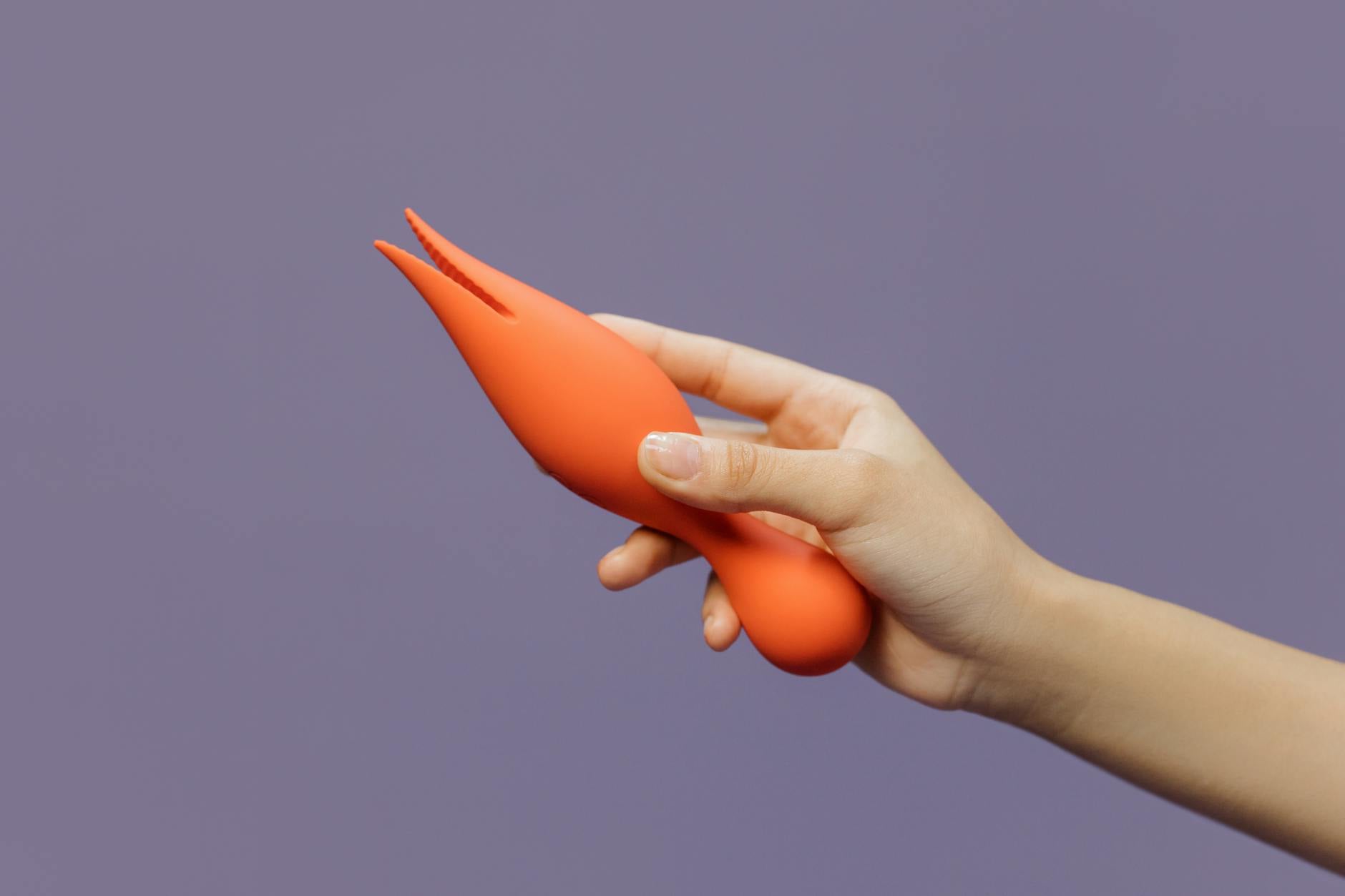
Let's name the real tension
Here's what happens: one partner loves the directness of touch—fingers, hands, skin. The other wants to add a lemon clitoral vibrator into the mix. Suddenly, touch feels like it's being replaced, not enhanced. Manual stimulation becomes a stepping stone to "the real thing," and that shift kills the intimacy you already have.
I work with couples on this specific friction constantly. The good news is that a lemon vibrator doesn't have to replace hands-on touch. It can become part of a longer, richer conversation between your bodies. But that only works if you build it intentionally.
Why manual touch feels different (and why it matters)
There's something about direct contact—the pressure variation, the temperature, the feedback loop of watching a partner respond—that a vibrator doesn't replicate. Your partner isn't being sentimental or old-fashioned. They're noticing something real: hands offer nuance that devices don't.
Here's what matters: a lemon vibrator doesn't have to compete with hands. It does something hands alone might struggle with. Sustained clitoral suction feels fundamentally different from manual friction. One isn't better. They're different doors into sensation.
When I suggest introducing a lemon clitoral vibrator to a partner who loves hands-on touch, I'm not asking them to let go of what works. I'm asking them to expand.
The conversation comes before the device
Don't introduce a vibrator mid-intimacy. That's the fastest way to make it feel like a correction or a replacement. Instead, have a conversation at a time when you're both clothed, clear-headed, and not in the heat of the moment.
Try something like: "I've been thinking about trying a lemon vibrator. Not instead of what we do now, but to go deeper into it. Would you be open to that?" The key is naming that you're adding to the experience, not subtracting.
Listen to their actual objection. If they say "I want to be the one making you feel good," that's different from "I think toys are weird." The first speaks to identity and control. The second is about comfort. You'll address each one differently.
How to blend manual touch with a lemon vibrator
Start with hands alone. Build arousal through your usual rhythm. Let them warm you up fully before the vibrator enters the picture. This keeps the intimacy centered on their touch and makes the vibrator feel like an extension of what's already happening, not an interruption.
Introduce the vibrator as a variation, not a replacement. Once you're close to orgasm, say something like "Want to try this together?" The phrase "together" matters. You're inviting them into a new texture, not asking them to step back.
Let them control the vibrator. This is crucial. If your partner is someone who loves manual touch, they want agency and responsiveness. Hand them the lemon vibrator. Let them hold it against you. Let them feel how your body responds. They're not being replaced. They're being given a new instrument.
Alternate between hand and vibrator. Use the vibrator for 30 seconds, then go back to their hands. Then vibrator again. This rhythm keeps both forms of touch alive and prevents the vibrator from becoming the only way you finish. Plus, alternating builds arousal differently—the contrast itself becomes part of the pleasure.
The specific setup that works
Positioning matters when you're blending manual and vibration stimulation. If you're lying on your back with your partner between your legs, ask them to hold the lemon vibrator while using their other hand elsewhere (inside you, on your breast, on your neck). This way, they're still actively present. The vibrator is one part of a larger touch.
Alternatively, you could hold the lemon clitoral vibrator yourself while they use their hands around it. This sounds subtle, but it's different psychologically. They're not watching you use the toy. They're watching you use it while their hands create additional sensations. It feels collaborative instead of solitary.
If you're facing each other, you could sit in their lap with the vibrator between you, or have them hold it while they kiss you or touch your chest. The point is to interrupt the visual narrative that says "vibrator time is alone time."
What happens if they still feel resistant
Resistance usually isn't about the vibrator itself. It's about what the vibrator represents: novelty, change, a suggestion that the current system isn't enough. Those feelings are worth taking seriously.
Some partners worry that you'll prefer the vibrator and stop wanting their touch. That's a real fear, even if it's not always voiced. The antidote isn't to convince them they're wrong. It's to show them through action. Use the lemon vibrator with them present and responsive. Orgasm sometimes with just the vibrator, yes. But also orgasm from their hands while they're holding the vibrator. Show them that their touch is still the baseline.
Other partners feel like toys are impersonal or that your pleasure becomes about a device rather than about them. This is where the conversation matters most. You're not trying to feel nothing about their hands. You're trying to reach a different kind of sensation that amplifies what they're already doing. That's still intimate. That's still collaborative.
Why this combination actually strengthens connection
Honestly, couples who figure out how to blend manual and vibration stimulation often report that their sex life deepens. Why? Because they've named something difficult, made decisions together, and found a way to expand their toolkit without losing what worked.
Your partner learns that they can be present and excited about your pleasure even when a device is involved. You learn that asking for what you want doesn't mean rejecting what he or she already gives. The lemon vibrator becomes less about a product and more about permission to explore together.
It also extends stamina. If your partner's hand gets tired, or your tissue gets too sensitive to continue with friction alone, the vibrator steps in. What might have been the end of sex becomes an opening for a new phase. That's practical and intimate at once.
When to use the lemon vibrator solo first
If your partner is really uncertain, consider exploring lemon vibrators on your own first. This removes the "performance pressure" and lets you actually understand what the device does and how it feels. Then, when you bring it into partnered sex, you're not discovering it together in real-time. You're inviting them to experience something you've already vetted.
This also means you can show them, rather than tell them. "Here, try holding it against me and see what happens to my body" is more powerful than explaining. Your genuine response becomes the evidence.
The bigger picture
Introducing any adult toy into a relationship where one partner already feels like they have a strong role requires care. You're not asking them to become less important. You're asking them to become more creative. A lemon clitoral vibrator, when blended thoughtfully with hands-on touch, doesn't compete with your partner. It gives them new ways to know you. That's worth taking the time to explain, negotiate, and discover together.
Common questions about lemon vibrators and partner comfort
Will using a lemon vibrator make my partner feel inadequate?
Not if you build it together and keep manual touch in the rotation. The key is never letting the vibrator become the primary way you reach orgasm when you're with them. Use it as one option among several. Include their hands in every encounter. Make sure they feel your pleasure response to their touch still matters. When partners see that toys enhance what you already have, inadequacy tends to dissolve.
Should I let my partner choose which lemon vibrator we buy?
Absolutely. Giving them input signals that this is a joint choice, not something you're doing despite their hesitation. They might choose something totally different from what you would have picked. That's good. It means they're invested.
Can we use a lemon vibrator if my partner is the one with a vulva?
Yes, completely. The same dynamics apply. If you're the partner who loves hands-on touch and they want to introduce a lemon clitoral vibrator, the same conversation framework applies. You could hold it, they could hold it, you could both be touching around it. The principle of blending, not replacing, stays the same.
How do I know if my partner is actually okay with this or just agreeing?
Pay attention to how they engage. If they're genuinely on board, they'll get curious. They'll ask questions. They might even suggest trying it in a certain position. If they're just tolerating it, they'll seem passive or distant. Check in mid-intimacy: "Is this working for you?" Their answer tells you whether you need to pause and recalibrate.
What if my partner never wants to use it together?
Respect that boundary, but also understand what's underneath it. Sometimes partners come around once they see you using the vibrator solo and it clearly makes you happy. Other times, they genuinely prefer partnered sex without toys. That's okay too. You can use a lemon vibrator solo, and you can have traditional partnered sex with them. Both are valid.
Is there a "right" way to introduce a lemon clitoral vibrator during sex?
The right way is the way your partner agrees to. But practically: start with hands, build arousal fully, then introduce the vibrator as a variation. Keep their hands involved. Don't let it become the main event. Alternate between vibrator and manual touch. This keeps the experience collaborative and prevents the vibrator from feeling like a replacement.
Next steps
If you're ready to have this conversation with your partner, start simple. Mention that you've been thinking about exploring together in a new way. Listen without defending. Then, when the moment feels right, explore the lemon clitoral vibrator as a team. What you discover together might surprise you both. Your pleasure doesn't have to choose between manual touch and vibration. It can have both.