
Why Lemon Vibrators Feel Different After Hormonal Changes
Hormones shape how your body experiences pleasure. When they shift, sensation shifts with them. That's not a loss. That's information.
If you've noticed that lemon clitoral vibrators feel different than they used to, or if sensation has become unpredictable, you're not imagining it. The change is real, it's physiological, and it's completely workable once you understand what's actually happening.
What hormonal shifts actually change
Estrogen doesn't just regulate your cycle. It thickens vaginal tissue, increases natural lubrication, and speeds up how quickly your body responds to touch. When estrogen levels drop, tissue becomes thinner and drier. Texture changes. Sensitivity can feel muted or sharp depending on the moment. Blood flow to the vulva becomes less reliable, which affects how quickly arousal builds.
This happens gradually during perimenopause and more dramatically after menopause. It also happens after certain medications, during hormonal contraception, after childbirth, and sometimes just from aging.
Here's what matters: none of this means your clitoris has stopped working. The nerve density is unchanged. The capacity for pleasure is intact. What's changed is the surrounding environment.
How lemon vibrators respond to these shifts
Lemon sexual toys work through suction and pulse patterns. Unlike direct vibration toys, suction doesn't depend on the thickness or moisture level of your tissue. In fact, when tissue is thinner, suction often feels sharper and more direct. Some people report their most intense orgasms come after tissue thinning, because there's less cushioning between the suction and the nerve endings.
This is why people switching from traditional vibrators to lemon vibrators often notice a difference during hormonal transitions. The stimulation mechanism bypasses some of the friction issues that flare up when estrogen drops.
The sensation you might notice changing
Four common shifts happen:
Delayed arousal response. Your body used to respond to touch in seconds. Now it takes minutes. This isn't numbness. This is your arousal curve flattening. The solution is longer warm-up, not more intense sensation.
Unpredictable sensitivity. Some days light touch feels overwhelming. Other days you need intensity to feel anything. This fluctuation is normal and often tied to where you are in any remaining hormonal cycle, or to stress, sleep, and hydration.
Sharper sensation in some spots. If tissue has thinned, direct stimulation can feel almost piercing instead of building. Starting on lower intensity settings with lemon clitoral vibrators and working up solves this quickly.
Slower peak. Your orgasm used to crest in waves. Now it might climb steadily, or plateau partway through. Different doesn't mean weaker. It means you need different pacing.
How to adapt your lemon vibrator use
You don't need a new toy. You need a different approach.
Start at pattern one. Most lemon vibrators have six to ten patterns. Pressure often gets interpreted as intensity. Begin at the lowest setting and stay there longer than you think you need. Your body will tell you when it's ready to increase.
Add lubrication intentionally. Water-based lube isn't a sign of failure. It's a tool. When estrogen-related thinning is happening, lube changes the texture entirely. It reduces friction that can feel scratchy and builds sensation that feels smooth. Use it every time, even if you feel naturally lubricated.
Budget time. Arousal is slower. Expect 20 to 30 minutes of warm-up instead of 10. This isn't a problem. This is an invitation to slow down, which most people report makes the eventual orgasm deeper.
Pay attention to positioning. When sensation is muted, angle matters more. Experiment with how you hold the toy, how much pressure you apply, and which part of your clitoris gets contact. What worked before might not be the sweet spot now.
The emotional layer nobody talks about
Hormonal changes often arrive with life transitions. Kids leaving home. Relationship shifts. Career changes. Loss. Grief. When pleasure becomes unpredictable, the temptation is to assume it's all hormonal and keep trying the same approach harder. Often it's something else.
If you have a partner, the conversation matters. Separating "my body is responding differently" from "I want us to reconnect" prevents both conversations from stalling. Work with what's true about your body right now, not what you remember from five years ago.
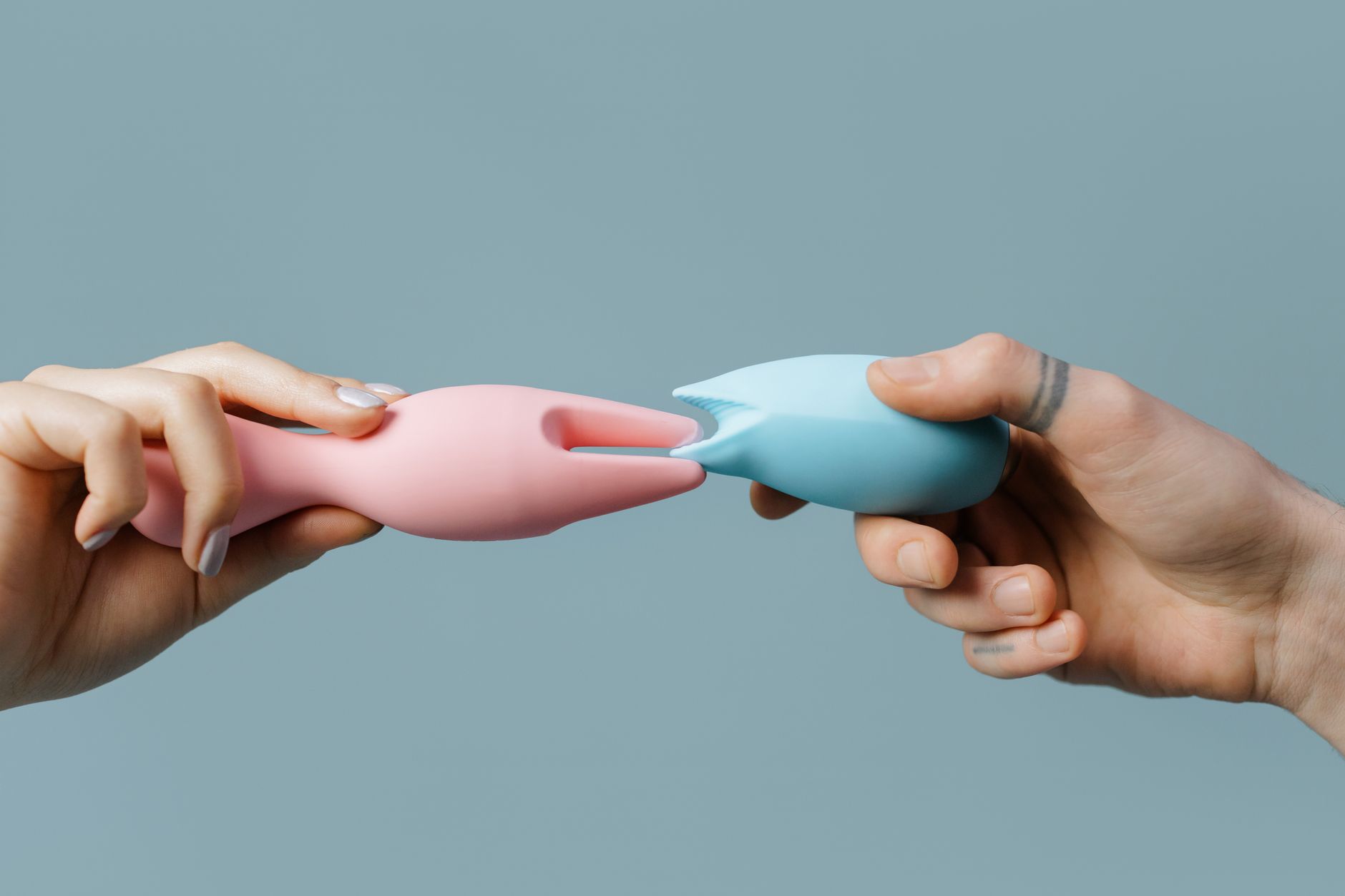
Photo by cottonbro studio on Pexels
When to get more support
If pain appears during sex, don't wait. Genitourinary syndrome (thinning and drying of genital tissue) is real, treatable, and often responds quickly to topical estrogen creams. A menopause-informed doctor can make a big difference in weeks.
If arousal has completely vanished and isn't returning after you've tried longer warm-up and changed your approach, hormonal therapy is worth discussing with your provider. Testosterone therapy can restore desire in people who've lost it to hormonal shifts.
If you're using antidepressants or birth control and notice numbed sensation, talk to your prescriber about whether switching medications is possible. Many people don't know that switching formulations can restore sensation without stopping the medication.
What you might discover on the other side
Hormonal changes feel disruptive at first. But they often open something unexpected. Many people report that after working through this transition, their orgasms become more reliable, more intense, and easier to reach than they were before. The pressure lifts. The performance stress softens. You have permission to explore what actually works for your body now, not what used to work.
When you're choosing the right lemon vibrator for your body, hormonal status matters. A toy that was perfect before might need a different setting now. That's not a downgrade. That's adaptation.
Lemon vibrators excel during hormonal transitions because suction doesn't depend on friction or baseline lubrication the way other toys do. They're also incredibly forgiving of the unpredictability that shows up. Start low, stay present, and trust that your body knows what it needs.
Your pleasure matters. And it's still there. Just wearing a different shape than it used to.
People also ask
Why does my lemon vibrator feel different than it used to?
Hormonal changes alter tissue thickness, natural lubrication, and how quickly your body responds to stimulation. Estrogen drop is the main culprit. This doesn't mean the toy is wrong or your body is broken. It means your body's environment has shifted, and a small adjustment to how you use the toy usually fixes it.
Can hormonal changes make you lose the ability to orgasm?
No. The neural pathways for orgasm don't disappear with hormonal shifts. What changes is the pathway to get there. Arousal takes longer. The pattern might shift. But the capacity is intact. Most people find that once they adjust their approach, orgasms come more reliably than before.
Should I switch to a different lemon sexual toy after hormonal changes?
Not usually. The issue is almost always technique or lubrication, not the toy itself. If you're using the Lem or another lemon clitoral vibrator, try starting at pattern one or two instead of your usual setting, add water-based lube, and allow more time. That solves 80% of the issues people report.
Does water-based lube work with lemon vibrators?
Completely. Water-based lube is the right choice for silicone toys, and it's essential during hormonal transitions when tissue naturally produces less lubrication. It doesn't interfere with suction stimulation. It enhances it by reducing friction.
How long does it take to adjust to pleasure changes from hormonal shifts?
Most people notice a difference within two to four weeks of changing their approach. Start at lower intensities, add lube consistently, and allow longer warm-up. Your body adapts faster than you think once you stop fighting the change and work with it instead.
Can I still use lemon vibrators during perimenopause?
Yes. Perimenopause actually offers an advantage: your hormones are still fluctuating, so some days sensation will feel closer to how it used to. On lower-sensation days, lower your toy's intensity and add lube. The flexibility of adjusting settings makes lemon clitoral vibrators especially useful during this transition.
The bottom line
Your body changed. So did the way pleasure moves through it. That's not a loss. That's information. And once you work with it instead of against it, you often find sensation that feels deeper, more reliable, and more integrated into your whole self than it was before.