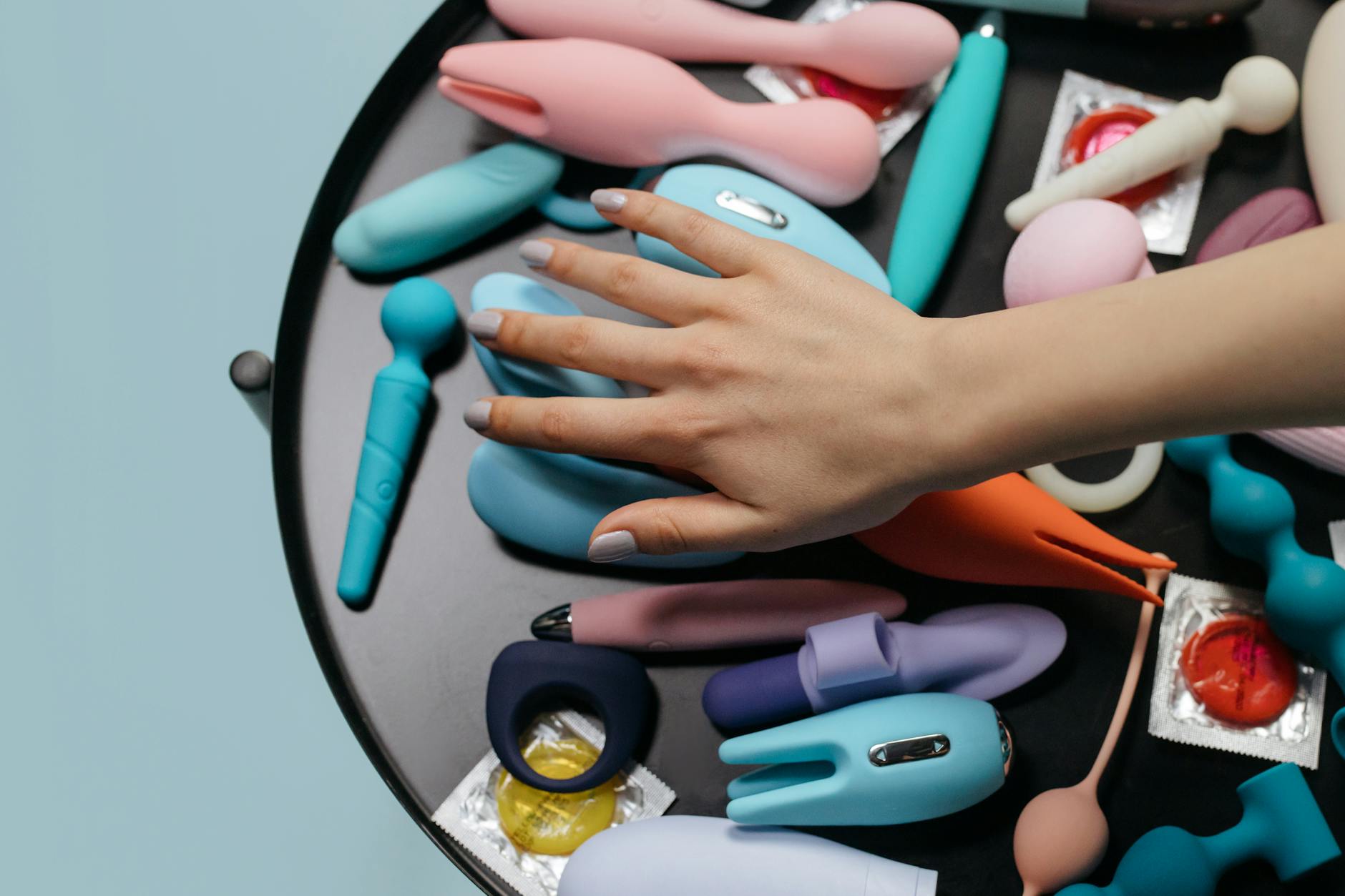
Here's what nobody tells you about clitoral vibrators
If you've ever tried a lemon vibrator and thought "this isn't working for me," the vibrator probably wasn't the problem. Your clitoris has its own preferences. The intensity that sends your best friend into orbit might feel like an electric shock to you. The pattern that works perfectly on Tuesday might feel off on Thursday. And the depth of stimulation that works depends partly on anatomy you were born with.
I've worked with hundreds of people navigating pleasure, and the single biggest gap I see is this: everyone gets the same vibrator, nobody gets the settings guide. You wouldn't wear someone else's glasses and assume your eyes are broken. But that's what happens with clitoral vibrators all the time.
Why anatomy matters more than you think
Your clitoris has three main structures: the visible external part (the glans), the internal arms that branch inward (the crura), and the vestibular bulbs that surround the vaginal opening. The size, shape, and positioning of these structures varies wildly from person to person. Some people have a glans that sits high and forward; others have one that's more recessed or off to one side.
This matters because it changes what kind of vibration actually reaches the nerves that feel good. A high-intensity direct vibration might overstimulate someone with a prominent glans but do nothing for someone with internal architecture that needs more pressure to feel sensation. A pattern that pulses quickly might feel sharp to someone with sensitive tissue but barely register for someone whose clitoris sits deeper.
There's no "right" way to be built. There's just anatomy, and settings, and learning to match them.
Start with intensity, not pattern
Most people skip straight to exploring patterns. That's backward.
Intensity comes first. If you start a lemon clitoral vibrator on pattern mode or high speed, you won't know if the problem is the intensity, the pattern, or both. Start on the lowest setting. The very lowest. Spend 2-3 minutes there just feeling the sensation. Then move up one level. Wait another 2-3 minutes. Notice what changes.
The goal isn't to race to the highest setting. It's to find the baseline where sensation stops being invisible and starts being interesting. Some people find that baseline at level 2. Others don't feel anything until level 5. Neither is wrong.
Once you've found your baseline intensity, everything else becomes easier. Patterns, angles, timing, all of it. You're working from a known starting point instead of guessing.
The external-versus-internal distinction
Here's where anatomy starts mattering in practical ways.
If your clitoris is mostly external and sensitive, you probably need lower intensity overall. Your nerve endings are closer to the surface. Direct vibration feels like a lot. For you, the best approach is often a lower intensity with sustained contact, or using the vibrator over clothing or with a layer of fabric between the device and your skin. This isn't a workaround. It's honoring how your body is built.
If your clitoris has significant internal architecture or sits deeper, you might need higher intensity to feel much of anything. Direct contact matters less than pressure. You might find yourself wanting the vibrator held firmly in place for several seconds rather than moving it around. You might also benefit from combining clitoral stimulation with internal pressure, which changes the overall sensation profile.
Many people find they're somewhere in the middle. Moderate intensity works. You have choices about technique. You might prefer direct contact some days and indirect contact other days depending on your cycle, stress level, or what kind of touch you're in the mood for.
Patterns: when to use them, when to skip them
Lemon vibrators typically have 3-5 different patterns beyond simple vibration. Most people assume patterns are "better" or more advanced. They're not. They're just different.
Patterns work best once you've figured out your baseline intensity and what kind of contact you prefer. A pattern at low intensity might feel like nothing. A pattern at high intensity might feel overwhelming. But a pattern at your sweet spot intensity? That's where you discover if patterns are for you at all.
Some people love them immediately. The rhythm and variation feel more interesting than steady vibration. Others find patterns distracting or uncomfortable. That's completely normal. Steady vibration at the right intensity is as valid as any pattern.
The most useful pattern is usually the one closest to your body's natural rhythm. That's different for everyone. One week of experimentation tells you more than any article ever could.
Positioning: angle, pressure, and movement
Once you've dialed in intensity and decided on pattern or steady vibration, positioning is what transforms the experience.
Direct head-on contact works for some anatomies. Side contact or angled contact works for others. Some people find the best sensation when the vibrator sits just above the glans rather than directly on it. Others want consistent pressure. Some like a slow, grinding motion. Others prefer a gentle up-and-down or side-to-side movement.
All of these are variations on a theme. None of them are "wrong." The goal is to notice what feels good and give yourself permission to do that thing.
Try spending a few minutes at each angle or position before moving on. Many people rush through the discovery phase because they assume they should know what works by now. You probably don't, and that's fine. Pleasure reveals itself through patience.
The durability piece: thinner tissue needs different pressure
Some people have tissue that's naturally more delicate. This might be genetic. It might be age-related. It might be from hormonal shifts, surgery recovery, or medications. How Lemon Vibrators Help When Sensitivity Feels Too Intense After Hormonal Shifts covers this in detail, but the practical takeaway is this: if direct vibration causes discomfort or irritation, you're not broken. You just need a different approach.
Lower intensity is the obvious adjustment. Adding a layer of fabric is often the next one. Some people find that holding the vibrator at an angle rather than perpendicular makes all the difference. Others benefit from more lubrication, even if they don't normally need it. The suction design of a lemon clitoral vibrator is particularly helpful here because suction stimulates nerves without the same mechanical pressure as traditional vibration.
If sensitivity is an issue for you, Why Lemon Vibrators Feel Better When You Have Vaginal Dryness has specific guidance on tissue care and technique.
Timing and rhythm within a session
You're not locked into one setting for the entire experience.
Many people find they want to start lower and build intensity. Others prefer staying at a consistent level and changing the angle or movement instead. Some like a pattern of intensity: two minutes at medium, thirty seconds at high, back to medium, holding somewhere in between. This rhythm lets sensation build without plateauing.
If you've been with the same intensity and setting for more than 3-4 minutes without much change, your body might be adjusting. Sometimes moving to a higher intensity resets that feeling. Sometimes shifting position does it. Sometimes taking a 30-second break and starting again works better.
You're not following a script. You're listening to feedback and adjusting. That's the entire point.
The partner conversation
If you're exploring lemon clitoral vibrators with a partner, the single most helpful thing you can do is talk about settings ahead of time. Not during. Beforehand.
"I like lower intensity" is information your partner needs. "I prefer this angle" helps them help you. How to Use a Lemon Clitoral Vibrator With Your Partner for Mutual Pleasure has deeper guidance, but the practical rule is simple: your partner can't read your anatomy. Give them a map.
People also ask
What intensity should I start at with a lemon vibrator if I've never used one before?
Start at the absolute lowest setting your device offers. Spend 2-3 minutes there. You're not looking for pleasure yet; you're mapping sensation. Then move up one level and repeat. This tells you exactly where your body's baseline is instead of guessing. Most beginners find their sweet spot between levels 2 and 4 out of 5, but that's a range, not a rule.
Can I use a lemon clitoral vibrator if I have really sensitive tissue?
Absolutely. You might just need adjustments. Lower intensity is the first one. Adding a thin layer of fabric between the vibrator and your skin is next. The suction design of lemon vibrators is actually gentler than traditional vibrators because it stimulates nerves without direct mechanical friction. Angle and pressure matter too. If you're still experiencing discomfort, a conversation with a healthcare provider is worth having.
Do I need to use patterns or can I just use steady vibration?
Steady vibration is completely sufficient. Patterns are an option if you want variety, not a requirement for pleasure. Many people find steady vibration at the right intensity and angle is exactly what they need and never explore patterns at all. Other people love patterns. Both approaches are valid.
How do I know if I'm using the wrong settings versus the vibrator just not being for me?
Give yourself at least three separate sessions before deciding. Try different intensities across those sessions. Try different angles and positions. Try moving it around versus holding it still. If you've experimented with those variables and nothing feels good, it might genuinely not be the right tool for your body. That happens sometimes. But most people find their settings fall into place once they stop guessing and start methodically exploring.
Should I always use the same settings or change them up?
Both work. Some people have one setting that feels perfect every time and they stick with it. Others like varying intensity, pattern, and angle from session to session. Your body changes depending on your cycle, stress level, how aroused you are, and a hundred other factors. The settings that work today might feel different next week. Flexibility beats rigidity.
Can my partner help me find my settings?
Yes, and it can be a really connecting experience. The conversation beforehand matters more than anything else. Tell them what you're exploring. Show them what intensity level feels good. Let them know if angle matters. They're not supposed to guess. They're supposed to follow your direction. That clarity turns the whole thing into genuine partnership instead of performance.
The practical next step
Order your thoughts this way: intensity first, then pattern choice, then positioning. Spend time at each step. There's no timer. Your clitoris doesn't care if this takes a week or a month.
Your anatomy is specific to you. The settings that work are yours alone. Once you find them, you've found something that works consistently. That's the whole goal. Not orgasm on command. Not performance. Just knowing exactly what your body responds to and being able to access that whenever you want to.
If you get stuck or hit dead ends, reach out. I'm always happy to help. Contact us with specific questions about technique or settings.